Get the fair value you deserve for your totaled vehicle in Texas
In Texas, your auto policy's appraisal clause gives you the right to appoint SecondAppraisal as your independent appraiser in a total-loss dispute.
Key takeaway
Tex. Ins. Code Chapter 1813 requires a personal auto policy that an insurer delivers, issues for delivery, or renews in Texas on or after January 1, 2026 to contain an appraisal provision that complies with the chapter (§§ 1813.001(a), 1813.003(a); S.B. 458 (2025), § 2(a)). Unless there was fraud, accident, or a material mistake relevant to the appraisal, or the award was made without authority, the amount of loss an appraisal under the chapter determines binds the policyholder and the insurer (§ 1813.004(b)). Section 1813.002(a)(1) directs the commissioner of insurance to set by rule the period for completing an appraisal; the Texas Department of Insurance's proposed rules, 28 TAC §§ 5.9800–5.9806, had no adoption date on its rules page as of October 1, 2026. In Chapter 542, Subchapter B (prompt payment of claims), a claim is a first-party claim the insurer must pay directly to the insured or beneficiary (§ 542.051(2)). If an insurer liable for such a claim does not comply with the subchapter, § 542.060(a) makes it liable for the claim plus interest on it at 18 percent a year as damages, and reasonable and necessary attorney's fees; § 542.060(c) sets another rate for Chapter 542A actions.
How SecondAppraisal helps
- •Free appraisal consultation — we review your offer before you commit.
- •At least $1,000 more, or your fee is waived. This applies once we accept your consultation and serve as your appraiser. The starting point is your insurer's offer on the day we accept. If the appraisal award, or a higher offer your insurer makes instead, is less than $1,000 above it, we waive our $495 Appointed Appraiser Service fee. If an umpire is needed, the umpire's fee is separate.
- •Average increase: $3,648 over the insurer's first offer (264 finished consultations that settled at or above the first offer, through Sep 25, 2026, before our fee).
How a total loss works in Texas
Insurance carriers in Texas use the Total Loss Threshold (TLT) method. When the cost to repair your vehicle reaches 100% of its pre-loss actual cash value (ACV), your insurer will declare your vehicle a total loss rather than authorize the repair. From that point, the dispute shifts from "will they fix it?" to "how much will they pay?"
Your appraisal-clause rights in Texas
Most US auto policies — including those issued in Texas — contain an appraisal clause that lets either you or the insurer demand a binding independent appraisal when you disagree on value. When invoked, you and the insurer each select a competent independent appraiser, and typically those two appraisers will agree to a new actual cash value. In the event those two appraisers are unable to agree on a value, the two appraisers can select an Umpire to break ties. Typically, you will split the cost of the third appraiser/umpire with the insurance carrier 50/50. In the event that the two appraisers are unable to agree on an umpire, the insured or the insurance carrier can petition a court with jurisdiction to select one. This rarely happens, but the chance isn't zero. The resulting valuation from any two appraisers and/or the umpire is binding.
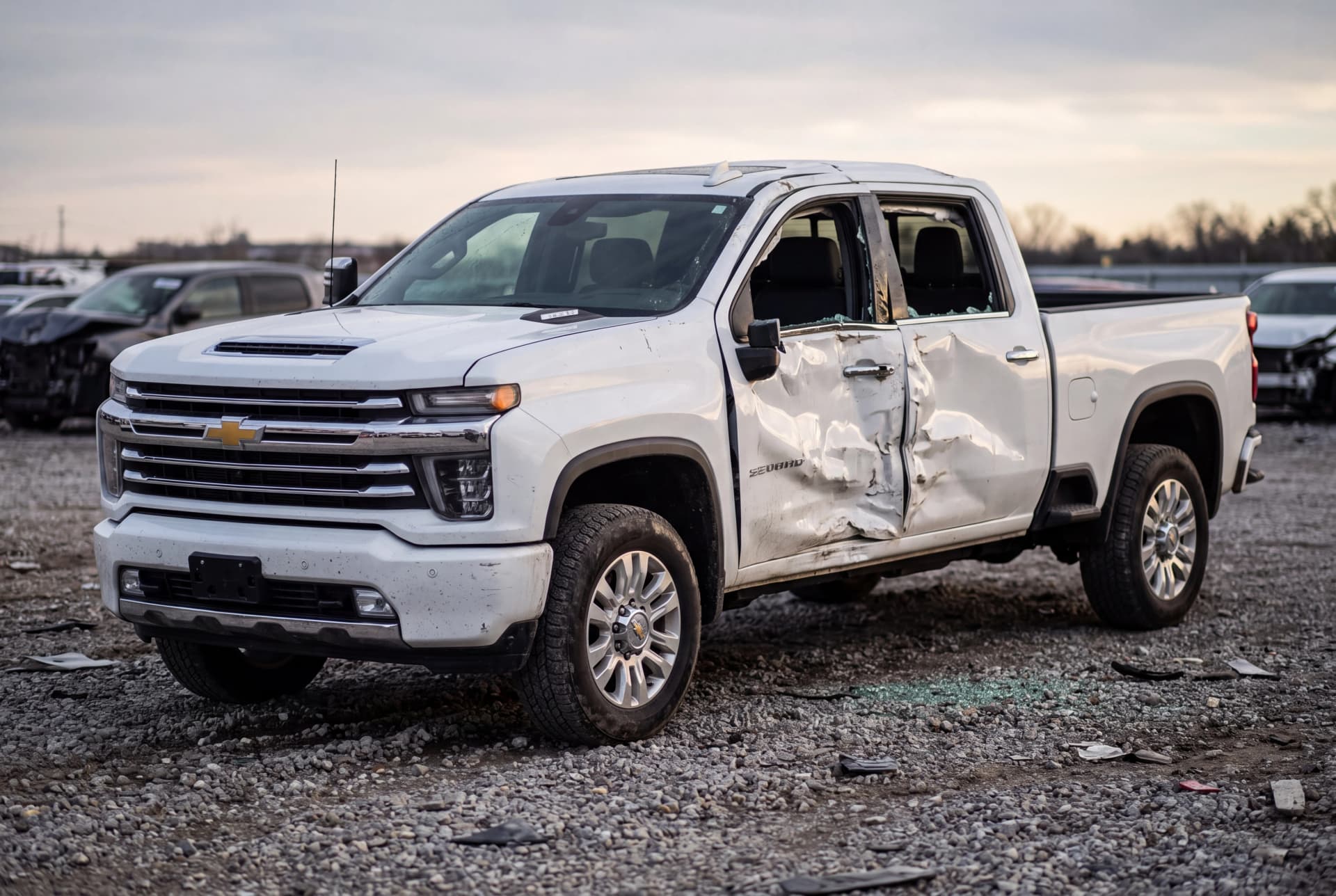
Another successful outcome in Texas
“We had an excellent experience with Second Appraisal. Johnathan was very easy to reach and communicated well. The process was easy and once we got all the information input Jonathan took over and handled it from there.”
Michael was initially offered $44,600 by the insurance company for his truck in Texas. Our research showed that this initial offer was too low, and the claim proceeded through the policy's appraisal clause. The final settlement came to $54,000, recovering $9,400 more than the insurer first presented.
- Progressive’s first offer
- $44,600
- Recovered above the offer
- +$9,400
- Total settlement
- $54,000
One customer's result, before our fee.
Total-loss help in TexasYour Texas rights at a glance
Mandatory binding appraisal under Chapter 1813 (SB 458)
Tex. Ins. Code Chapter 1813 requires every personal auto policy delivered, issued, or renewed on or after January 1, 2026, to contain an appraisal provision whose award is binding except in cases of fraud, accident, material mistake, or an appraisal award made without authority. TDI's PROPOSED rules would require the provision to let either party unilaterally demand appraisal and would set the timing (for auto: a written demand within 120 days after the insurer's acceptance-or-rejection notice, 40 days for the appraisers to try to agree, and an award within 180 days of the demand when an umpire is involved). Sec. 1813.002(a)(1) leaves the completion period to the commissioner's rules, which remain in rulemaking.
18% statutory interest plus attorney's fees under Chapter 542
Tex. Ins. Code § 542.060(a) makes prompt-payment violations civilly actionable: a violating insurer is liable for the amount of the claim, plus interest on the claim at 18 percent a year as damages, plus reasonable and necessary attorney's fees. The prime-plus-5-percent rate in § 542.060(c) applies only in actions under Chapter 542A, which covers claims on real property damaged by forces of nature. Section 542.055 sets a 15-day acknowledgment deadline and § 542.057 sets a 5-business-day pay-after-acceptance deadline.
Up to treble damages for knowing § 541.060 violations
Tex. Ins. Code § 541.060(a) prohibits failing to attempt in good faith to effectuate a prompt, fair, and equitable settlement when liability is reasonably clear, refusing to pay a claim without a reasonable investigation, and failing to provide a reasonable explanation for denial or compromise. Subchapter D allows actual damages, court costs, attorney's fees, and up to three times actual damages for knowing violations.
Texas Insurance Code Chapter 1813 — Appraisal of Disputed Losses (SB 458) + Chapter 542 Prompt Payment
Texas changed the playing field for auto total-loss disputes with SB 458 (Tex. Ins. Code Chapter 1813), which applies to personal auto policies delivered, issued, or renewed on or after January 1, 2026: every such policy must include a binding appraisal provision. TDI's PROPOSED rules (28 TAC §§ 5.9800–5.9806, published May 8, 2026; not adopted when this entry was checked) would let either side demand appraisal and set the timing (for auto, a 120-day demand window, 40 days for the appraisers to agree, and a 180-day award deadline with an umpire). The award is binding except for fraud, accident, material mistake, or absence of authority. Stack that on top of Tex. Ins. Code Chapter 542's prompt-payment regime — which adds interest at 18% a year as damages plus reasonable and necessary attorney's fees when an insurer misses its deadlines — and § 541.060's unfair-claims liability with up to treble damages for knowing violations.
Common things to look for in Texas
Recognize these scenarios in your offer letter or comparable report — and what we do about them.
Insurer claiming the policy doesn't have an appraisal clause
For any personal auto policy issued or renewed on or after January 1, 2026, Tex. Ins. Code Chapter 1813 requires an appraisal clause as a matter of state law — the insurer cannot exclude it by form language. If the policy in your hand pre-dates 1/1/2026, check the most recent renewal endorsement; the clause was added by SB 458 at renewal.
Insurer dragging out the investigation past the 15-day acknowledgment / 5-day-pay deadlines
Tex. Ins. Code § 542.055 requires acknowledgment within 15 days of notice. § 542.057 requires payment within 5 business days of an acceptance notice. § 542.060 makes those deadlines civilly enforceable with interest at 18% a year as damages plus attorney's fees. Document the timeline carefully — late acknowledgments alone can build prompt-payment exposure.
Take-it-or-leave-it offer without a written explanation of the valuation methodology
Tex. Ins. Code § 541.060(a)(3) prohibits 'failing to promptly provide to a policyholder a reasonable explanation of the basis in the policy, in relation to the facts or applicable law, for the insurer's denial of a claim or offer of a compromise settlement.' Demand the per-comparable, per-deduction breakdown in writing — and a refusal to provide one is itself a § 541.060 unfair-practice exposure.
Texas Department of Insurance
If you believe your insurer is acting in bad faith, you can file a complaint with Texas Department of Insurance — Consumer Protection Help Line at 800-252-3439 — tdi.texas.gov ↗.
Relevant Texas precedent
How SecondAppraisal helps Texas policyholders
- Free appraisal consultation — confirm your offer is below fair market value before you commit.
- VIN-decoded option audit so every factory feature is credited.
- Accurate and appropriate comparable vehicle research.
- Line-by-line audit of the insurer's adjustments.
- Once you invoke the appraisal clause, we carry out the appraisal process.
Total-loss help in major Texas cities
City-specific total-loss guides with local risk factors and your appraisal-clause rights:
Frequently asked questions
What is the total-loss threshold in Texas?▼
Can I invoke the appraisal clause in a third-party insurance carrier / at-fault insurance carrier claim in Texas?▼
What does SecondAppraisal cost in Texas?▼
How long does a Texas total-loss appraisal take?▼
Ready to push back on a low Texas total-loss offer?
Start your free appraisal consultation in 5 minutes. At least $1,000 more than your insurer's offer, or your $495 fee is waived, once we accept your consultation. Our results: $3,648 more than the insurer's first offer, on average, before our fee. From 264 finished consultations that settled at or above the insurer's first offer, through September 25, 2026; past results, not a promise.
Get My Free Appraisal Consultation