Georgia Total Loss Appraisal

Get the fair value you deserve for your totaled vehicle in Georgia

In Georgia, your auto policy's appraisal clause gives you the right to appoint SecondAppraisal as your independent appraiser in a total-loss dispute.

Georgia Total-Loss Threshold
Total Loss Formula (TLF)
Appraisal Clause
Available in most policies
Fair Claims Settlement Practices
O.C.G.A. §§ 33-6-34, 33-4-6; Ga. Comp. R. & Regs. R. 120-2-52-.06
Appraiser Licensing
Review appointment requirements
Official source
rules.sos.ga.gov ↗

How SecondAppraisal helps

  • •Free appraisal consultation — we review your offer before you commit.
  • •At least $1,000 more, or your fee is waived. This applies once we accept your consultation and serve as your appraiser. The starting point is your insurer's offer on the day we accept. If the appraisal award, or a higher offer your insurer makes instead, is less than $1,000 above it, we waive our $495 Appointed Appraiser Service fee. If an umpire is needed, the umpire's fee is separate.
  • •Average increase: $3,648 over the insurer's first offer (264 finished consultations that settled at or above the first offer, through Sep 25, 2026, before our fee).

How a total loss works in Georgia

Insurance carriers in Georgia use the Total Loss Formula (TLF) method. When the cost of repair plus the salvage value of your damaged vehicle equals or exceeds its pre-loss actual cash value (ACV), your insurer will declare your vehicle a total loss rather than authorize the repair. From that point, the dispute shifts from "will they fix it?" to "how much will they pay?"

Your appraisal-clause rights in Georgia

Most US auto policies — including those issued in Georgia — contain an appraisal clause that lets either you or the insurer demand a binding independent appraisal when you disagree on value. When invoked, you and the insurer each select a competent independent appraiser, and typically those two appraisers will agree to a new actual cash value. In the event those two appraisers are unable to agree on a value, the two appraisers can select an Umpire to break ties. Typically, you will split the cost of the third appraiser/umpire with the insurance carrier 50/50. In the event that the two appraisers are unable to agree on an umpire, the insured or the insurance carrier can petition a court with jurisdiction to select one. This rarely happens, but the chance isn't zero. The resulting valuation from any two appraisers and/or the umpire is binding.
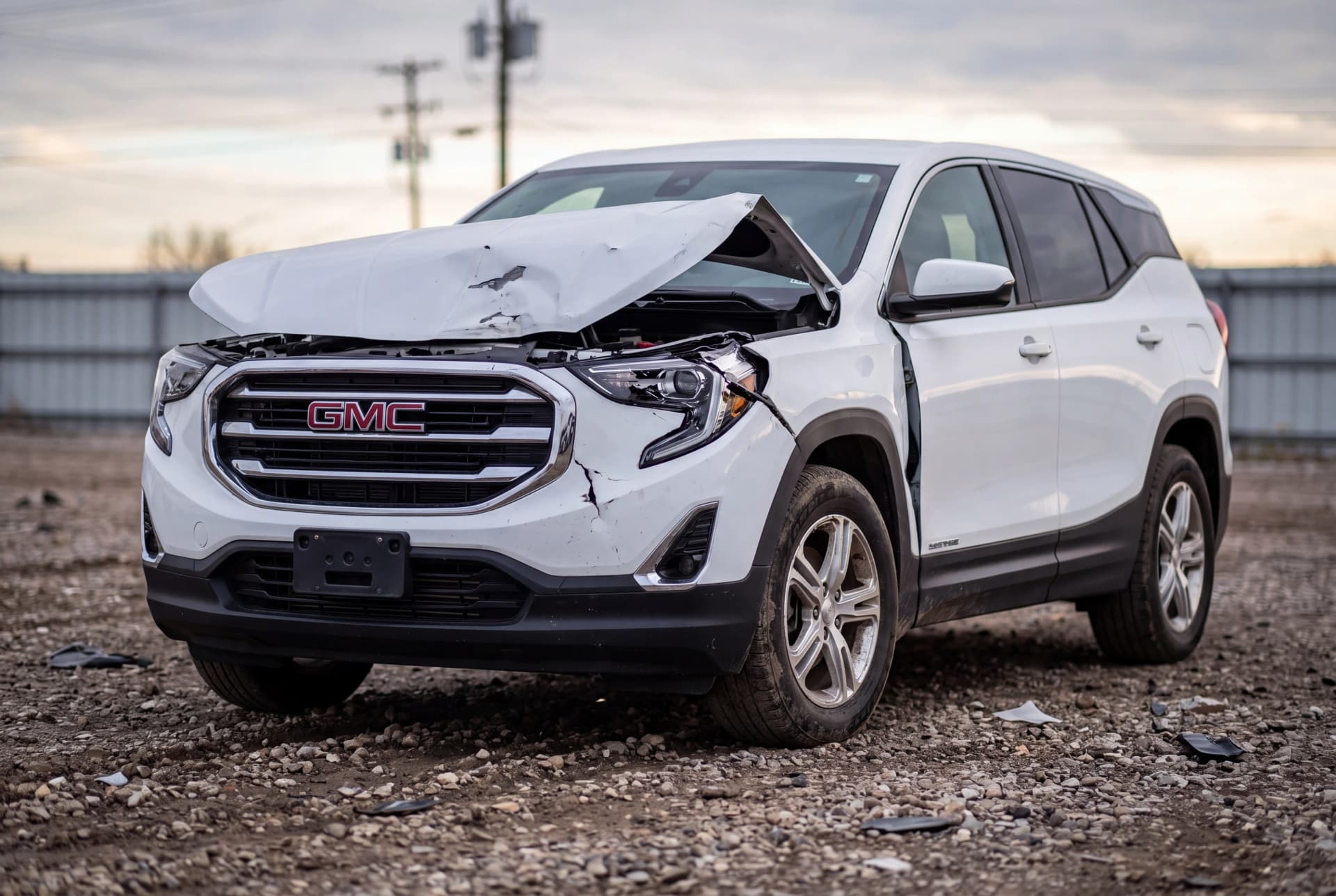
A totaled Summit White 2022 GMC Terrain SLE after a front-end collision

Another successful outcome in Georgia

“Jonathon is great. He communicated well with us as he took care of all the details of the appraisal clause with our insurance company and their 3rd party appraiser. The original settlement offer was a real low ball, Jonathon got us $3900 more than the original!”

— Todd M., Georgia

When Joann was offered $18,073 for her totaled 2022 GMC Terrain in Georgia, our research showed that the initial proposal was far too low. After the insurer hired an independent representative, the matter proceeded through the policy's appraisal clause. The final settlement was raised to $21,972, securing an additional $3,899 above the initial offer.

Progressive’s first offer
$18,073
Recovered above the offer
+$3,899
Total settlement
$21,972

One customer's result, before our fee.

Total-loss help in Georgia

Georgia Code §§ 33-6-34, 33-4-6 + Ga. Comp. R. & Regs. R. 120-2-52-.06

Georgia's total-loss framework rests on a 50-mile local market definition. Ga. Comp. R. & Regs. R. 120-2-52-.06 limits the insurer to (1) two-or-more comparables in the local market area (50 miles from the county seat where the vehicle was principally garaged), available or available-within-the-last-30-days, (2) two-or-more comparables in areas proximate to the local market area (defined as 100 miles from the county seat) when local-market comparables are unavailable, (3) one of two or more quotations from licensed dealers within the 50-mile local market area when methods (1) and (2) are unavailable, or (4) a statistically valid source (covering at least 85% of all makes and models for at least the last 15 model years) giving primary consideration to local-market values. O.C.G.A. § 33-6-34 prohibits 14 specific unfair claim practices but does not create a private right of action; the leverage comes from O.C.G.A. § 33-4-6, which gives a policyholder a bad-faith cause of action with up to 50% of the liability (or $5,000, whichever is greater) plus attorney's fees if the insurer refuses to pay within 60 days of a written demand and the refusal is motivated by bad faith. The 60-day demand letter is the operational gate to that remedy.

Georgia regulates first-party automobile total losses through three layered authorities: the unfair-claim-practices statute at O.C.G.A. § 33-6-34, the bad-faith civil-remedy statute at O.C.G.A. § 33-4-6, and the closed-list valuation rule at Ga. Comp. R. & Regs. R. 120-2-52-.06. Ga. Comp. R. & Regs. R. 120-2-52-.06 — Total Loss Vehicle Claims: (a) Cash Equivalent Method. The insurer may elect to pay a cash equivalent settlement based upon the actual cost (less any deductible) to purchase a comparable automobile by the same manufacturer, same model year, with similar body style, similar options and mileage, including all applicable taxes, license fees and other fees incident to the transfer of ownership. Such cost shall be based on one or more of the following methods: 1. The cost of two or more comparable automobiles in the local market area, defined as fifty (50) miles from the county seat where the insured vehicle was principally garaged, when comparable automobiles are available or were available within the last thirty (30) days to consumers in the local market area. Sources may include dealer's sales price, any established printed automobile sales publication or newspaper. 2. The cost of two or more comparable automobiles in areas proximate to the local market area, defined as one hundred (100) miles from the county seat where the insured vehicle was principally garaged, when comparable automobiles are not available in the local market area. 3. One of two or more quotations obtained by the insurer from two or more licensed dealers located within the 50-mile local market area, used when methods (1) and (2) are unavailable. 4. Any source for determining statistically valid fair market values that meets specific coverage and data requirements (electronic or printed format), giving primary consideration to vehicles in the local market area. The database used must cover at least 85% of all makes and models for at least the last fifteen (15) model years. (b) Replacement Vehicle Method. If the insurer elects to replace the vehicle, the replacement must be comparable in manufacturer model, same or newer model year, similar body style, similar options and mileage, in good overall condition, and available for inspection within fifty (50) miles of the insured's residence. O.C.G.A. § 33-6-34 — Unfair Claims Settlement Practices. The statute prohibits fourteen specific acts when committed "flagrantly and in conscious disregard of this article" or "with such frequency so as to indicate a general business practice," including: knowingly misrepresenting policy provisions; failing to acknowledge claim communications promptly; failing to adopt procedures for prompt investigation and settlement; not attempting in good faith to effectuate prompt, fair, and equitable settlement when liability is reasonably clear; compelling insureds to litigate by offering substantially less than amounts ultimately recovered; refusing to pay claims without conducting a reasonable investigation; and failing in writing to provide a reasonable and accurate explanation of the basis for a denial or compromise offer when requested. O.C.G.A. § 33-4-6 — Civil Remedy for Bad Faith. Section 33-6-34 itself does not create a private right of action, but O.C.G.A. § 33-4-6 does. Where (1) the claim is covered, (2) the insurer refuses to pay within 60 days of a written demand for payment prior to suit, and (3) the refusal is motivated by bad faith, the policyholder may recover the loss plus up to 50% of the liability of the insurer (or $5,000, whichever is greater) plus reasonable attorney's fees.
As of May 21, 2026
Excerpt — full statute at official source.

Georgia Department of Insurance

If you believe your insurer is acting in bad faith, you can file a complaint with Georgia Office of Insurance and Safety Fire Commissioner — Consumer Services at 404-656-2070 — oci.georgia.gov ↗.

How SecondAppraisal helps Georgia policyholders

  1. Free appraisal consultation — confirm your offer is below fair market value before you commit.
  2. VIN-decoded option audit so every factory feature is credited.
  3. Accurate and appropriate comparable vehicle research.
  4. Line-by-line audit of the insurer's adjustments.
  5. Once you invoke the appraisal clause, we carry out the appraisal process.

Frequently asked questions

What is the total-loss threshold in Georgia?▼
Georgia uses the Total Loss Formula (TLF) method, not a fixed percent. Your insurer is required to declare your vehicle a total loss when the cost of repair plus the salvage value of the damaged vehicle equals or exceeds the pre-loss actual cash value (ACV).
Can I invoke the appraisal clause in a third-party insurance carrier / at-fault insurance carrier claim in Georgia?▼
Generally no — the appraisal clause is part of YOUR policy, not the at-fault driver's. If you are stuck with a third-party insurance carrier that refuses to negotiate, you can often switch to a first-party claim under your own policy and let your insurer pursue subrogation.
What does SecondAppraisal cost in Georgia?▼
Your appraisal consultation is free. The Appointed Appraiser Service is $495. It includes the Appraisal Research, our appointment as your appraiser under your insurance policy's appraisal clause, determining the amount of loss with your insurer's appraiser, and the appraisal award letter. At least $1,000 more, or your fee is waived. This applies once we accept your consultation and serve as your appraiser. The starting point is your insurer's offer on the day we accept. If the appraisal award, or a higher offer your insurer makes instead, is less than $1,000 above it, we waive our $495 Appointed Appraiser Service fee. If an umpire is needed, the umpire's fee is separate. There is no upfront payment: we pre-authorize your card only after we accept your consultation. Our results: $3,648 more than the insurer's first offer, on average, before our fee. From 264 finished consultations that settled at or above the insurer's first offer, through September 25, 2026; past results, not a promise.
How long does a Georgia total-loss appraisal take?▼
How long the appraisal takes depends on your insurer's appraiser and, if one is needed, the umpire.

Ready to push back on a low Georgia total-loss offer?

Start your free appraisal consultation in 5 minutes. At least $1,000 more than your insurer's offer, or your $495 fee is waived, once we accept your consultation. Our results: $3,648 more than the insurer's first offer, on average, before our fee. From 264 finished consultations that settled at or above the insurer's first offer, through September 25, 2026; past results, not a promise.

Get My Free Appraisal Consultation