Alaska Total Loss Appraisal

Get the fair value you deserve for your totaled vehicle in Alaska

In Alaska, your auto policy's appraisal clause gives you the right to appoint SecondAppraisal as your independent appraiser in a total-loss dispute.

Alaska Total-Loss Threshold
100% of pre-loss value
Appraisal Clause
Available in most policies
Fair Claims Settlement Practices
AS § 21.36.125; 3 AAC 26.080; AS § 09.30.080; 2 AAC 92.170, 2 AAC 92.190
Appraiser Licensing
Review appointment requirements
Official source
akleg.gov ↗

How SecondAppraisal helps

  • •Free appraisal consultation — we review your offer before you commit.
  • •At least $1,000 more, or your fee is waived. This applies once we accept your consultation and serve as your appraiser. The starting point is your insurer's offer on the day we accept. If the appraisal award, or a higher offer your insurer makes instead, is less than $1,000 above it, we waive our $495 Appointed Appraiser Service fee. If an umpire is needed, the umpire's fee is separate.
  • •Average increase: $3,648 over the insurer's first offer (264 finished consultations that settled at or above the first offer, through Sep 25, 2026, before our fee).

How a total loss works in Alaska

Insurance carriers in Alaska use the Total Loss Threshold (TLT) method. When the cost to repair your vehicle reaches 100% of its pre-loss actual cash value (ACV), your insurer will declare your vehicle a total loss rather than authorize the repair. From that point, the dispute shifts from "will they fix it?" to "how much will they pay?"

Your appraisal-clause rights in Alaska

Most US auto policies — including those issued in Alaska — contain an appraisal clause that lets either you or the insurer demand a binding independent appraisal when you disagree on value. When invoked, you and the insurer each select a competent independent appraiser, and typically those two appraisers will agree to a new actual cash value. In the event those two appraisers are unable to agree on a value, the two appraisers can select an Umpire to break ties. Typically, you will split the cost of the third appraiser/umpire with the insurance carrier 50/50. In the event that the two appraisers are unable to agree on an umpire, the insured or the insurance carrier can petition a court with jurisdiction to select one. This rarely happens, but the chance isn't zero. The resulting valuation from any two appraisers and/or the umpire is binding.
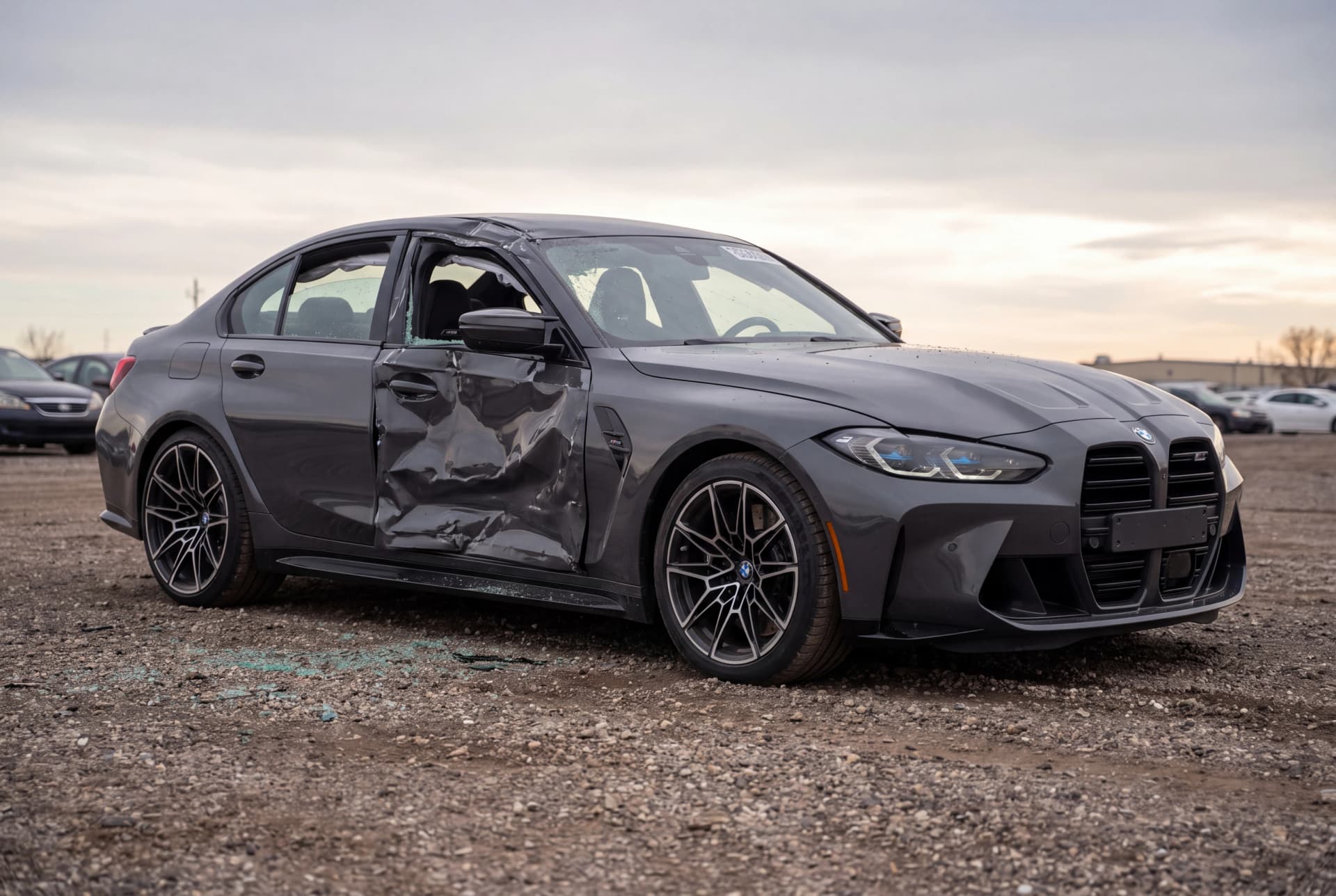
A totaled Dravit Grey Metallic 2026 BMW M3 Competition xDrive after a passenger-side collision

Another successful outcome in Alaska

When the insurer first offered $96,513 for DaneConnick's 2026 BMW M3 in Alaska, our research showed that offer was too low. The insurer brought in its own appraiser, so the claim went through the policy appraisal clause. The final settlement came to $105,000, securing $8,487 above the first offer.

Allstate’s first offer
$96,513
Recovered above the offer
+$8,487
Total settlement
$105,000

One customer's result, before our fee.

Total-loss help in Alaska

Alaska Total Loss Framework — AS § 21.36.125 + 3 AAC 26 + State Farm v. Nicholson

Alaska regulates first-party automobile total losses through three layered authorities: the Unfair Claims Settlement Practices statute at AS § 21.36.125, the implementing claim-handling regulation at 3 AAC 26.080 (auto-specific settlement standards within the broader chapter 3 AAC 26), and the common-law tort of first-party bad faith recognized by the Alaska Supreme Court in State Farm Fire & Casualty Co. v. Nicholson, 777 P.2d 1152 (Alaska 1989). AS § 21.36.125 — Unfair Claim Settlement Practices. The statute provides that a person may not commit any of a list of acts and practices, including: misrepresenting pertinent facts or insurance policy provisions; failing to acknowledge and act with reasonable promptness on claim communications; failing to adopt and implement reasonable standards for the prompt investigation of claims; refusing to pay claims without conducting a reasonable investigation; failing to affirm or deny coverage of claims within a reasonable time; not attempting in good faith to effectuate prompt, fair, and equitable settlements when liability is reasonably clear; and engaging in a pattern or practice of compelling insureds to litigate for amounts due by offering substantially less than the amounts ultimately recovered. The Alaska statute does not provide a private right of action; enforcement runs through the Alaska Division of Insurance. 3 AAC 26.080 — Claim-Handling Regulation for Automobile Total Losses. The regulation establishes a structured waterfall for cash-settlement valuation, giving primary consideration to comparable motor vehicles in the local market area that are currently available or were available during the preceding 90 days: 3 AAC 26.080(a)(1)(B)(i) — Comparable motor vehicle. A cash settlement is based on the actual cost to purchase a comparable motor vehicle, including all applicable taxes, license fees, and other fees incident to transfer of ownership, less any deductible. The cost is first determined by the cost of a comparable motor vehicle in the local market area, if one is available there or was available during the last 90 days. 3 AAC 26.080(a)(1)(B)(ii) — Dealer quotations. If no comparable motor vehicle is available in the local market area, the cost is the average of two or more quotations from two or more licensed dealers located within the local market area; if two quotes are not available there, the search area may be expanded in 25-mile increments until two quotes are obtained. 3 AAC 26.080(a)(1)(B)(iii) and (i) — Computerized database. The insurer may use a computerized database valuation service that produces statistically valid fair market values. Its source must give primary consideration to comparable motor vehicles in the local market area that are currently available or were available during the last 90 days, and must produce values for at least 85 percent of all makes and models for the last 15 model years; if it finds fewer than two comparables, the search may be expanded to the last 180 days and then outward in 25-mile increments. 3 AAC 26.080(h) — Betterment. An insurer may reduce the value of the motor vehicle on the basis of betterment; any deductions must be measurable, be itemized, have specific dollar amounts, and be documented in the claim file. 3 AAC 26.080(j)–(k) — Right of recourse. If the claimant notifies the insurer not later than 60 days after receipt of the claim payment that the claimant cannot purchase a comparable vehicle for the amount determined, the insurer must, if the appraisal section of the policy has not been exercised, reopen its claim file and determine a new settlement amount: it may locate a comparable motor vehicle available through a licensed dealer for the value it determined at settlement, with taxes and fees paid; if the claimant has located a comparable of like kind and quality, it may pay the difference or negotiate and effect the purchase; or, for a first-party claimant, it may conclude the loss settlement using the policy's appraisal provisions. Under (k), the insurer need not act if, at the time of settlement, it gave the claimant documentation of the location of a specific comparable motor vehicle available for purchase for the agreed settlement amount and the claimant did not buy it within 10 working days after final payment was sent, or if the policy's appraisal section has been exercised. State Farm Fire & Casualty Co. v. Nicholson, 777 P.2d 1152 (Alaska 1989). The Alaska Supreme Court recognized first-party bad faith as a tort separate from breach of contract, holding that an insurer's unreasonable handling of a first-party claim — including unreasonable denial, unreasonable delay, or unreasonable failure to investigate — supports both compensatory and, on appropriate showings, punitive damages. Lockwood v. Geico General Insurance Co., 323 P.3d 691 (Alaska 2014), confirmed that unreasonable delay in payment of a covered claim supports a Nicholson bad-faith tort and held that an insurer's claims-handling manuals are discoverable because they bear on the standard of reasonableness. Lockwood reversed summary judgment for the insurer and remanded for trial on a UM-claim delay theory. AS § 09.30.070 / § 09.30.080 — Prejudgment Interest. Alaska law provides prejudgment interest at three percentage points above the 12th Federal Reserve District discount rate in effect on January 2 of the year in which judgment is entered. Prejudgment interest accrues from the earlier of (a) the date defendant receives written notification that injury occurred and a claim may be brought, or (b) the date defendant is served with process. The interest accrual on unpaid total-loss benefits is itself a financial lever. 2 AAC 92.170 and 2 AAC 92.190 — Salvage Title. Alaska's salvage scheme operates via regulation rather than statute. 2 AAC 92.170 sets the duties of an insurance company that obtains title to an unrepairable vehicle; 2 AAC 92.190 governs the salvage-title branding of such a vehicle. Alaska uses a total-loss-formula approach (ACV ≤ cost of repairs + salvage value) rather than a percentage threshold, with the insurer's good-faith determination subject to challenge under the Nicholson bad-faith framework.
As of May 21, 2026
Excerpt — full statute at official source.

How SecondAppraisal helps Alaska policyholders

  1. Free appraisal consultation — confirm your offer is below fair market value before you commit.
  2. VIN-decoded option audit so every factory feature is credited.
  3. Accurate and appropriate comparable vehicle research.
  4. Line-by-line audit of the insurer's adjustments.
  5. Once you invoke the appraisal clause, we carry out the appraisal process.

Frequently asked questions

What is the total-loss threshold in Alaska?▼
Alaska's total-loss threshold is 100% of pre-loss actual cash value (ACV) — a Total Loss Threshold (TLT) regime. Once the cost of repair reaches 100% of ACV, your insurer is required to declare your vehicle a total loss instead of authorizing repair.
Can I invoke the appraisal clause in a third-party insurance carrier / at-fault insurance carrier claim in Alaska?▼
Generally no — the appraisal clause is part of YOUR policy, not the at-fault driver's. If you are stuck with a third-party insurance carrier that refuses to negotiate, you can often switch to a first-party claim under your own policy and let your insurer pursue subrogation.
What does SecondAppraisal cost in Alaska?▼
Your appraisal consultation is free. The Appointed Appraiser Service is $495. It includes the Appraisal Research, our appointment as your appraiser under your insurance policy's appraisal clause, determining the amount of loss with your insurer's appraiser, and the appraisal award letter. At least $1,000 more, or your fee is waived. This applies once we accept your consultation and serve as your appraiser. The starting point is your insurer's offer on the day we accept. If the appraisal award, or a higher offer your insurer makes instead, is less than $1,000 above it, we waive our $495 Appointed Appraiser Service fee. If an umpire is needed, the umpire's fee is separate. There is no upfront payment: we pre-authorize your card only after we accept your consultation. Our results: $3,648 more than the insurer's first offer, on average, before our fee. From 264 finished consultations that settled at or above the insurer's first offer, through September 25, 2026; past results, not a promise.
How long does an Alaska total-loss appraisal take?▼
How long the appraisal takes depends on your insurer's appraiser and, if one is needed, the umpire.

Ready to push back on a low Alaska total-loss offer?

Start your free appraisal consultation in 5 minutes. At least $1,000 more than your insurer's offer, or your $495 fee is waived, once we accept your consultation. Our results: $3,648 more than the insurer's first offer, on average, before our fee. From 264 finished consultations that settled at or above the insurer's first offer, through September 25, 2026; past results, not a promise.

Get My Free Appraisal Consultation