Get the fair value you deserve for your totaled vehicle in Arkansas
In Arkansas, your auto policy's appraisal clause gives you the right to appoint SecondAppraisal as your independent appraiser in a total-loss dispute.
Key takeaway
In Arkansas, Ark. Code Ann. § 23-79-208(a)(1) provides that an insurer liable for a loss that fails to pay it within the time specified in the policy after demand is made is liable, in addition to the amount of the loss, for twelve percent (12%) damages upon the amount of the loss and all reasonable attorney's fees for its prosecution and collection. Aetna Casualty & Surety Co. v. Broadway Arms Corp., 281 Ark. 128 (1984), held that a bad-faith tort claim must include affirmative misconduct by the insurer, without a good-faith defense, that is dishonest, malicious, or oppressive in an attempt to avoid its liability under the policy, and cannot be based on a good-faith denial, an offer to compromise a claim, or other honest errors of judgment. Under 23 CAR § 15-108(b)(3) (formerly Rule 43), deductions in a total-loss settlement that deviates from the rule's methods must be measurable, discernible, itemized and specified as to dollar amount, and appropriate in amount.
How SecondAppraisal helps
- •Free appraisal consultation — we review your offer before you commit.
- •At least $1,000 more, or your fee is waived. This applies once we accept your consultation and serve as your appraiser. The starting point is your insurer's offer on the day we accept. If the appraisal award, or a higher offer your insurer makes instead, is less than $1,000 above it, we waive our $495 Appointed Appraiser Service fee. If an umpire is needed, the umpire's fee is separate.
- •Average increase: $3,648 over the insurer's first offer (264 finished consultations that settled at or above the first offer, through Sep 25, 2026, before our fee).
How a total loss works in Arkansas
Insurance carriers in Arkansas use the Total Loss Threshold (TLT) method. When the cost to repair your vehicle reaches 70% of its pre-loss actual cash value (ACV), your insurer will declare your vehicle a total loss rather than authorize the repair. From that point, the dispute shifts from "will they fix it?" to "how much will they pay?"
Your appraisal-clause rights in Arkansas
Most US auto policies — including those issued in Arkansas — contain an appraisal clause that lets either you or the insurer demand a binding independent appraisal when you disagree on value. When invoked, you and the insurer each select a competent independent appraiser, and typically those two appraisers will agree to a new actual cash value. In the event those two appraisers are unable to agree on a value, the two appraisers can select an Umpire to break ties. Typically, you will split the cost of the third appraiser/umpire with the insurance carrier 50/50. In the event that the two appraisers are unable to agree on an umpire, the insured or the insurance carrier can petition a court with jurisdiction to select one. This rarely happens, but the chance isn't zero. The resulting valuation from any two appraisers and/or the umpire is binding.
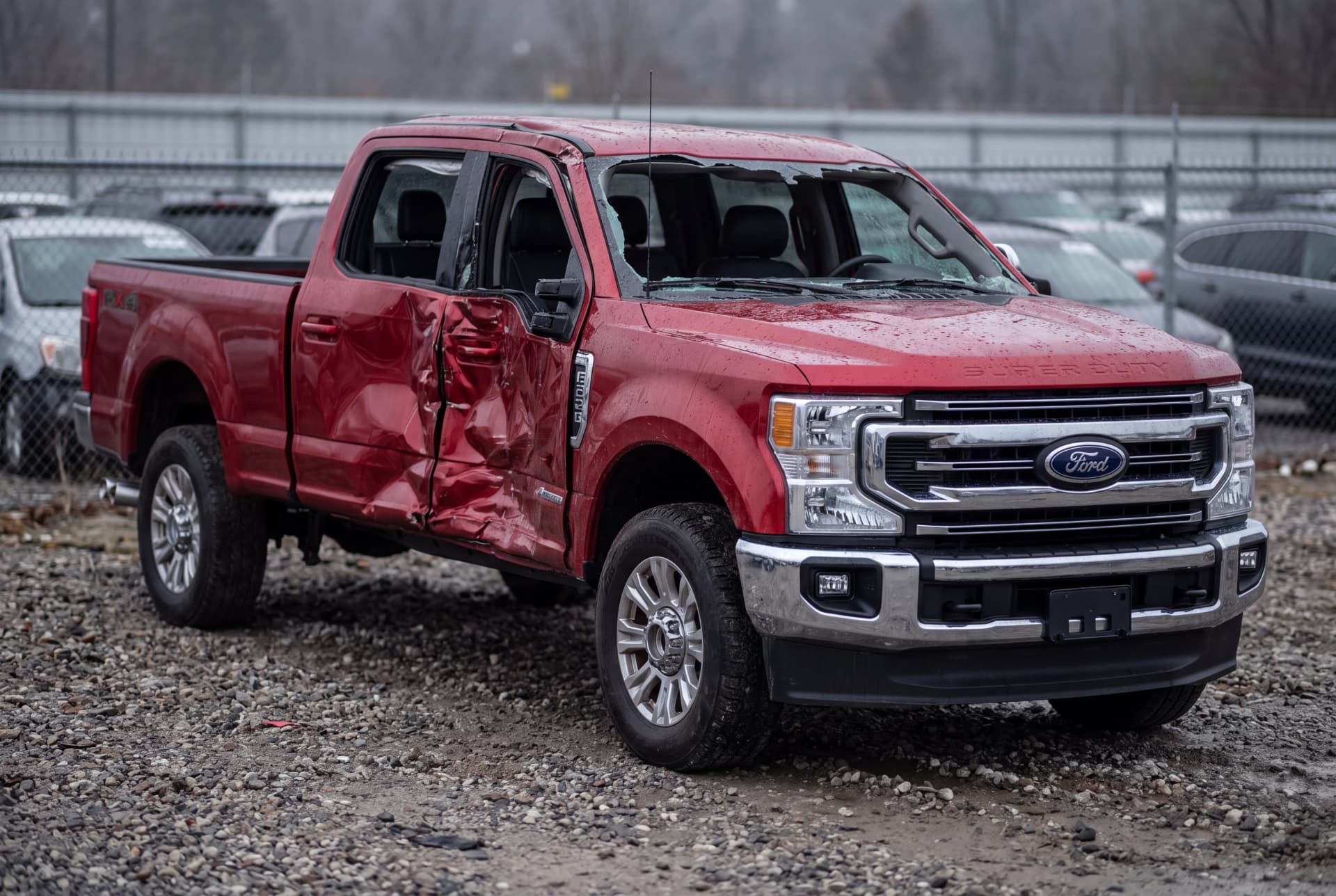
Another successful outcome in Arkansas
William faced an initial offer of $44,232 from his insurer for his 2022 Ford F-250 Super Duty in Arkansas. We conducted our research to uncover what the truck was truly worth, which helped guide the process through the policy appraisal clause. In the end, the final settlement reached $48,893, securing an additional $4,661 above the first offer.
- Allstate’s first offer
- $44,232
- Recovered above the offer
- +$4,661
- Total settlement
- $48,893
One customer's result, before our fee.
Total-loss help in ArkansasYour Arkansas rights at a glance
12% statutory penalty + attorney's fees under Ark. Code Ann. § 23-79-208
When the insurance company fails to pay the loss within the time specified in the policy after demand by the insured, the insured may recover 12% damages on the amount of the loss plus a reasonable attorney's fee on top of the contract amount. No proof of "affirmative misconduct" is required — the statute applies on the underlying contract claim, making it the most practical financial lever in Arkansas total-loss litigation.
Closed-list settlement methods + itemized dollar-specified deviation adjustments under AID Rule 43 / 23 CAR § 15-108
Arkansas Insurance Department Rule 43 (recodified at 23 CAR § 15-108) gives the insurer three settlement methods: (1) a specific replacement automobile with all transfer fees paid; (2) cash settlement based on the cost of a comparable in the local market area (with two or more dealer or appraisal-service quotations available only when no local comparable exists); or (3) a documented deviation with deductions measurable, discernible, itemized, and specified as to dollar amount. Sales tax, license, title, and transfer fees must be included under methods (1) and (2).
First-party bad-faith tort fallback under Aetna v. Broadway Arms
For conduct beyond simple underbidding, Aetna v. Broadway Arms (Ark. 1984) recognized first-party bad faith as a tort with compensatory and (on appropriate showings) punitive damages — but applies an "affirmative misconduct, dishonest, malicious, or oppressive" bar (drawn from Members Mutual Ins. v. Blissett, 254 Ark. 211 (1973)). The bad-faith tort is reserved for cases of demonstrable misconduct beyond simple underbidding; the policy's appraisal clause and § 23-79-208's 12% penalty are the more practical levers for routine valuation disputes. Arkansas Rule 43 does not contain a regulatory "right of recourse" provision.
Arkansas Total Loss Framework — Ark. Code Ann. §§ 23-66-206, 23-79-208 + AID Rule 43
Arkansas's total-loss framework rests on the UTPA at Ark. Code Ann. § 23-66-206 (no private right of action), Arkansas Insurance Department Rule 43 (recodified at 23 CAR § 15-108) — three settlement methods (specific replacement, cash settlement based on a comparable, or documented deviation) with deductions in a deviation settlement required to be measurable, discernible, itemized, and specified as to dollar amount — and Ark. Code Ann. § 23-79-208's 12%-of-loss statutory penalty plus reasonable attorney's fees on demand-and-non-payment. The Aetna v. Broadway Arms first-party bad-faith tort exists but applies a relatively high "affirmative misconduct, dishonest, malicious, or oppressive" bar; for most total-loss disputes, § 23-79-208's 12% penalty + fees is the practical lever. The 70% damage-to-average-retail-value salvage threshold (excluding vehicles more than seven model years old before the year of the occurrence) lives at Ark. Code Ann. § 27-14-2301 and DFA Rule 2007-8. Arkansas Rule 43 does not contain a "right of recourse" provision.
Common things to look for in Arkansas
Recognize these scenarios in your offer letter or comparable report — and what we do about them.
Insurer arguing § 23-79-208 doesn't apply because there's no formal "specified time" in the policy
Document the demand date and track every day past the policy's prompt-payment window.
Lump-sum or non-itemized condition deductions
AID Rule 43 (23 CAR § 15-108(b)(3)(B)(i) and (h)) requires deductions in any deviation settlement, and any betterment / depreciation reduction, to be measurable, discernible, itemized, and specified as to dollar amount in the claim file. Generic adjustments without that specification do not meet the regulation.
Comparables drawn from outside the local market area
AID Rule 43 / 23 CAR § 15-108(b) gives primary consideration to the cost of a comparable automobile in the local market area, and only allows two-or-more dealer or appraisal-service quotations when no local comparable is available. Insurers sometimes use database queries that sweep in vehicles or dealers from a different metropolitan area. Demand the underlying VINs, dealer addresses, and the geographic-area parameter.
Arkansas Department of Insurance
If you believe your insurer is acting in bad faith, you can file a complaint with Arkansas Insurance Department — Consumer Services at 800-852-5494 — insurance.arkansas.gov ↗.
Relevant Arkansas precedent
How SecondAppraisal helps Arkansas policyholders
- Free appraisal consultation — confirm your offer is below fair market value before you commit.
- VIN-decoded option audit so every factory feature is credited.
- Accurate and appropriate comparable vehicle research.
- Line-by-line audit of the insurer's adjustments.
- Once you invoke the appraisal clause, we carry out the appraisal process.
Frequently asked questions
What is the total-loss threshold in Arkansas?▼
Can I invoke the appraisal clause in a third-party insurance carrier / at-fault insurance carrier claim in Arkansas?▼
What does SecondAppraisal cost in Arkansas?▼
How long does an Arkansas total-loss appraisal take?▼
Ready to push back on a low Arkansas total-loss offer?
Start your free appraisal consultation in 5 minutes. At least $1,000 more than your insurer's offer, or your $495 fee is waived, once we accept your consultation. Our results: $3,648 more than the insurer's first offer, on average, before our fee. From 264 finished consultations that settled at or above the insurer's first offer, through September 25, 2026; past results, not a promise.
Get My Free Appraisal Consultation