Get the fair value you deserve for your totaled vehicle in Maryland
In Maryland, your auto policy's appraisal clause gives you the right to appoint SecondAppraisal as your independent appraiser in a total-loss dispute.
Key takeaway
Md. Code Ann., Cts. & Jud. Proc. § 3-1701 covers only first-party claims under property and casualty or individual disability policies issued, sold, or delivered in Maryland. If a judge or jury finds for the insured and finds that the insurer failed to act in good faith, the insured may recover actual damages up to the policy limits, expenses and litigation costs including reasonable attorney's fees (capped at one-third of the actual damages recovered), and interest (§ 3-1701(e), (g)). With three exceptions, including District Court small claims, the complaint must first be filed with the Maryland Insurance Administration, which must issue a decision within 90 days, and the suit may not be filed before a final decision (Md. Code Ann., Ins. § 27-1001(c)-(e); § 3-1701(c)). For a private passenger vehicle total loss, COMAR 31.15.12.05 requires a cash settlement offer to tell the claimant that, on request, the insurer will provide in writing its valuation method, a detailed explanation of its calculation, a list of all deductions, and the inspection guidelines it relied on. Under COMAR 31.15.12.06, the claimant may reject the offer in writing and counteroffer based on dealer quotations, advertisements, or other valuation sources for a substantially similar vehicle; if the insurer rejects the counteroffer, it must explain in writing within 5 business days why the claimant's information does not provide a more accurate valuation than the insurer's.
How SecondAppraisal helps
- •Free appraisal consultation — we review your offer before you commit.
- •At least $1,000 more, or your fee is waived. This applies once we accept your consultation and serve as your appraiser. The starting point is your insurer's offer on the day we accept. If the appraisal award, or a higher offer your insurer makes instead, is less than $1,000 above it, we waive our $495 Appointed Appraiser Service fee. If an umpire is needed, the umpire's fee is separate.
- •Average increase: $3,648 over the insurer's first offer (264 finished consultations that settled at or above the first offer, through Sep 25, 2026, before our fee).
How a total loss works in Maryland
Insurance carriers in Maryland use the Total Loss Threshold (TLT) method. When the cost to repair your vehicle reaches 75% of its pre-loss actual cash value (ACV), your insurer will declare your vehicle a total loss rather than authorize the repair. From that point, the dispute shifts from "will they fix it?" to "how much will they pay?"
Your appraisal-clause rights in Maryland
Most US auto policies — including those issued in Maryland — contain an appraisal clause that lets either you or the insurer demand a binding independent appraisal when you disagree on value. When invoked, you and the insurer each select a competent independent appraiser, and typically those two appraisers will agree to a new actual cash value. In the event those two appraisers are unable to agree on a value, the two appraisers can select an Umpire to break ties. Typically, you will split the cost of the third appraiser/umpire with the insurance carrier 50/50. In the event that the two appraisers are unable to agree on an umpire, the insured or the insurance carrier can petition a court with jurisdiction to select one. This rarely happens, but the chance isn't zero. The resulting valuation from any two appraisers and/or the umpire is binding.
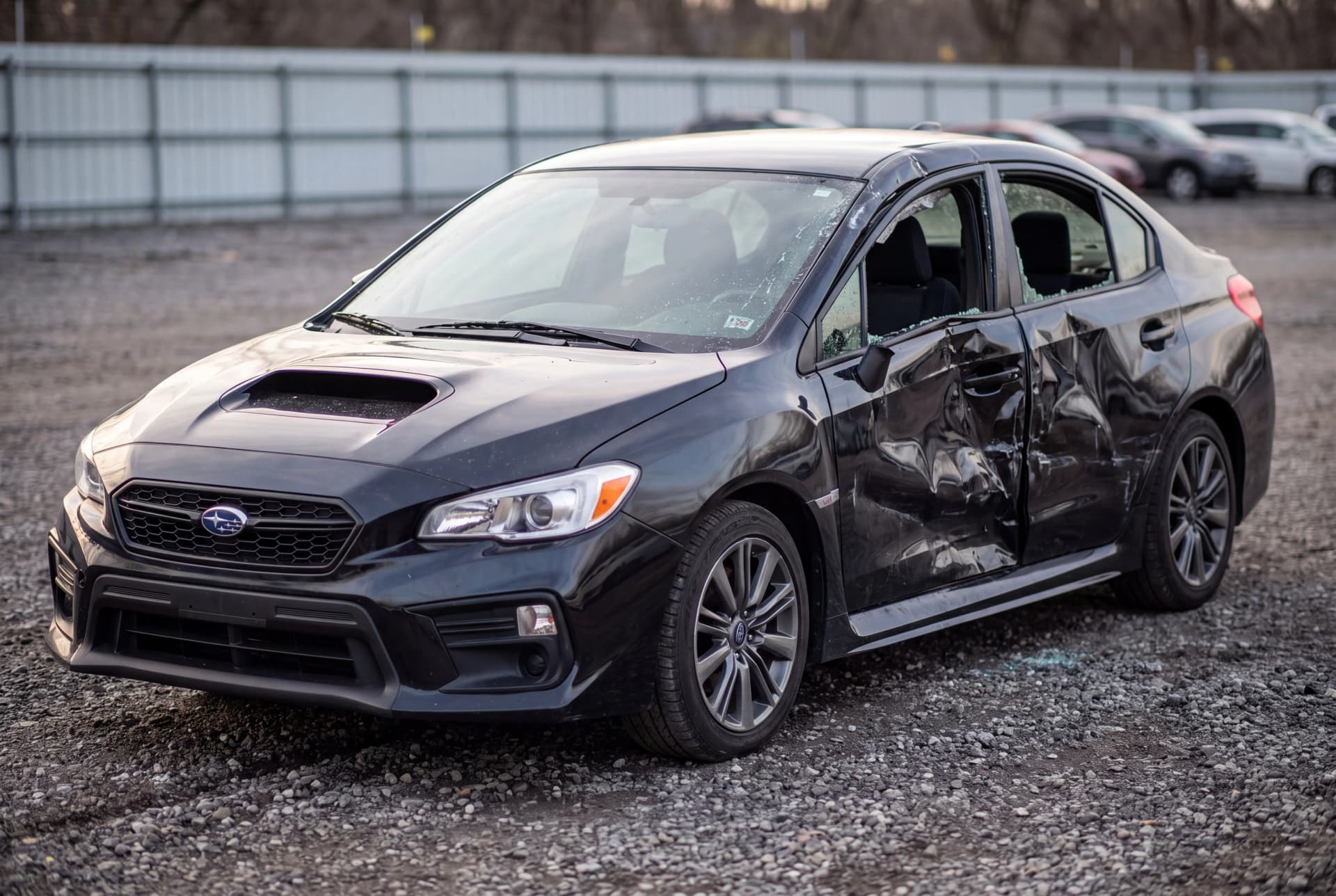
Another successful outcome in Maryland
“Second Appraisal has this figured out. Easy to use website for a well needed 2nd insurance appraisal. For a modest fee, they communicate directly with the insurance company and handle everything. I received an additional $2,500 from what my insurance company claimed was the actual cash value.”
When a Maryland driver was offered $18,063 for their 2021 Subaru WRX, our research showed that the initial proposal fell short of the vehicle's true market value. Because the insurer brought in its own appraiser, the dispute proceeded through the policy's appraisal clause to reach an agreement. The final settlement increased to $20,357, delivering $2,294 above the first offer.
- State Farm’s first offer
- $18,063
- Recovered above the offer
- +$2,294
- Total settlement
- $20,357
One customer's result, before our fee.
Total-loss help in MarylandYour Maryland rights at a glance
First-party bad-faith private right of action under Md. Ins. § 27-1001
Effective October 1, 2007, Maryland insureds can recover actual damages (capped at policy limits), expenses and reasonable attorney's fees (with fees capped at one-third of actual damages per § 27-1001(e)(4)), and interest at the rate allowed under Md. Code CJP § 11-107(a), when the insurer fails to act in good faith. The first step is an administrative complaint to the Maryland Insurance Administration; its decision can go to a de novo hearing and then to circuit court, and after a final decision you may also bring the parallel court action under Md. Code CJP § 3-1701.
Statutory cash-settlement methods under COMAR 31.15.12.04
Maryland's regulation requires the insurer's minimum cash-settlement offer to be built from one of two sources, plus applicable taxes and transfer fees: (A) the retail value for a substantially similar vehicle from a nationally recognized valuation manual or a computerized database that produces statistically valid fair market values; or (B) a quotation for a substantially similar vehicle from a qualified dealer at a location reasonably convenient to you. Maryland does not use the NAIC-model "two or more comparables / two or more dealer quotations" closed list, so the dispute centers on whether the manual/database value or the dealer quotation actually reflects a substantially similar vehicle.
Mandatory written disclosure of method, calculation, deductions, and inspection guidelines (COMAR 31.15.12.05)
On your request, the insurer must provide in writing — within 7 business days — a copy of the offer, the method used to value the vehicle (including identification of any books, manuals, or databases used), a detailed explanation of the calculation including the value added by options, a list of all deductions, and a copy of the inspection guidelines it relied on. This disclosure duty is Maryland's documentary lever: it forces the insurer to put its valuation basis and every deduction on paper.
Maryland Total Loss Framework — Md. Ins. §§ 27-303, 27-1001 + COMAR 31.15.12
Maryland is one of the few states that codified a first-party bad-faith private right of action: Md. Code Ann., Ins. § 27-1001, effective October 1, 2007 (with the parallel court-action statute at Md. Code Cts. & Jud. Proc. § 3-1701), lets an insured recover actual damages (capped at policy limits), expenses and litigation costs (including reasonable attorney's fees capped at one-third of actual damages per § 27-1001(e)(4)), and interest at the rate allowed under CJP § 11-107(a). The framework runs through an initial administrative complaint at the Maryland Insurance Administration, with circuit-court appeal rights. Below the bad-faith statute sit the UCSPA at Md. Code Ann., Ins. § 27-303 and the motor-vehicle valuation regulation at COMAR 31.15.12, under which the insurer's minimum cash-settlement offer must be built from either a nationally recognized valuation manual / statistically valid computerized database or a qualified-dealer quotation (plus taxes and transfer fees), and the insurer must — on request — disclose in writing the method, the full calculation, a list of all deductions, and the inspection guidelines it relied on (COMAR 31.15.12.05), with a claimant right to counteroffer and force a written justification (COMAR 31.15.12.06). The 75% repair-to-pre-loss-value salvage threshold lives at Md. Vehicle Law § 11-152.
Common things to look for in Maryland
Recognize these scenarios in your offer letter or comparable report — and what we do about them.
Insurer treating an MIA complaint as the end of the road
The Maryland Insurance Administration administrative process under § 27-1001 is the first step, not the only step. A party with an adverse decision may request a de novo hearing within 30 days and may appeal a final decision to circuit court (§ 27-1001(f)–(g)), and after a final decision the insured may bring the civil action under Md. Code CJP § 3-1701 for actual damages, expenses and reasonable attorney's fees, and interest. File the MIA complaint to preserve the statutory pathway, then escalate.
A manual/database value or dealer quote that isn't for a "substantially similar" vehicle
COMAR 31.15.12.04 ties both settlement methods to a "substantially similar motor vehicle" (defined in .02), and the dealer quotation must come from a qualified dealer "at a location reasonably convenient to the claimant." A database pull or dealer quote built on a different trim, options, or mileage — or a dealer far from you — is not compliant. Use the .05 disclosure to demand the identified database/manual and the dealer's location, then counteroffer under .06.
Deductions taken without the required written breakdown
COMAR 31.15.12.05 requires the insurer, on request, to provide in writing a list of ALL deductions taken from the value plus a copy of the inspection guidelines it relied on. An insurer that applies condition, mileage, or prior-damage deductions without producing that list and those guidelines has not met the regulation's disclosure standard. Demand the itemized deduction list and the inspection guidelines, then challenge each deduction in a .06 counteroffer.
Maryland Department of Insurance
If you believe your insurer is acting in bad faith, you can file a complaint with Maryland Insurance Administration — Consumer Complaint Unit at 800-492-6116 — insurance.maryland.gov ↗.
Relevant Maryland precedent
How SecondAppraisal helps Maryland policyholders
- Free appraisal consultation — confirm your offer is below fair market value before you commit.
- VIN-decoded option audit so every factory feature is credited.
- Accurate and appropriate comparable vehicle research.
- Line-by-line audit of the insurer's adjustments.
- Once you invoke the appraisal clause, we carry out the appraisal process.
Frequently asked questions
What is the total-loss threshold in Maryland?▼
Can I invoke the appraisal clause in a third-party insurance carrier / at-fault insurance carrier claim in Maryland?▼
What does SecondAppraisal cost in Maryland?▼
How long does a Maryland total-loss appraisal take?▼
Ready to push back on a low Maryland total-loss offer?
Start your free appraisal consultation in 5 minutes. At least $1,000 more than your insurer's offer, or your $495 fee is waived, once we accept your consultation. Our results: $3,648 more than the insurer's first offer, on average, before our fee. From 264 finished consultations that settled at or above the insurer's first offer, through September 25, 2026; past results, not a promise.
Get My Free Appraisal Consultation