Get the fair value you deserve for your totaled vehicle in New Jersey
In New Jersey, your auto policy's appraisal clause gives you the right to appoint SecondAppraisal as your independent appraiser in a total-loss dispute.
Key takeaway
In New Jersey, N.J.A.C. 11:3-10.4(a) provides that an insurer that elects to make a cash settlement "must bear in mind at all times that the insured's position is that of a retail consumer and the settlement value arrived at must be reasonable and fair for a person in that position." Subsection (b) requires the insurer to reopen its claim file if it is notified in writing, within 30 calendar days of the receipt of the claim draft, that the insured cannot purchase a comparable vehicle at the market value the insurer established, and subsection (d) requires the insurer to use the same source of settlement for all claims unless it is documented that the primary settlement source is not available in the case of a particular vehicle.
How SecondAppraisal helps
- •Free appraisal consultation — we review your offer before you commit.
- •At least $1,000 more, or your fee is waived. This applies once we accept your consultation and serve as your appraiser. The starting point is your insurer's offer on the day we accept. If the appraisal award, or a higher offer your insurer makes instead, is less than $1,000 above it, we waive our $495 Appointed Appraiser Service fee. If an umpire is needed, the umpire's fee is separate.
- •Average increase: $3,648 over the insurer's first offer (264 finished consultations that settled at or above the first offer, through Sep 25, 2026, before our fee).
How a total loss works in New Jersey
Under N.J.S.A. 39:10-32, when a vehicle has suffered sufficient damage to render it economically impractical to repair, the person holding its certificate of ownership must surrender the certificate to the Motor Vehicle Commission's chief administrator, who issues a salvage certificate of title after determining ownership. The Commission's rule, N.J.A.C. 13:21-22.3, defines "economically impractical to repair". For a vehicle manufactured eight or fewer model years from the current model year, it means the cost to repair the vehicle, on a bona fide repair estimate, equals or exceeds its fair market value immediately before it was damaged. For an older vehicle whose fair market value before the damage equals or exceeds that of the same make and model manufactured five years from the current model year (or a similar make and model, if that one is no longer made), it means either that repair-cost test or the insurer settling a total loss claim with the owner for the damage. Once your insurer treats your vehicle as a total loss, the dispute shifts from "will they fix it?" to "how much will they pay?"
Your appraisal-clause rights in New Jersey
Most US auto policies — including those issued in New Jersey — contain an appraisal clause that lets either you or the insurer demand a binding independent appraisal when you disagree on value. When invoked, you and the insurer each select a competent independent appraiser, and typically those two appraisers will agree to a new actual cash value. In the event those two appraisers are unable to agree on a value, the two appraisers can select an Umpire to break ties. Typically, you will split the cost of the third appraiser/umpire with the insurance carrier 50/50. In the event that the two appraisers are unable to agree on an umpire, the insured or the insurance carrier can petition a court with jurisdiction to select one. This rarely happens, but the chance isn't zero. The resulting valuation from any two appraisers and/or the umpire is binding.
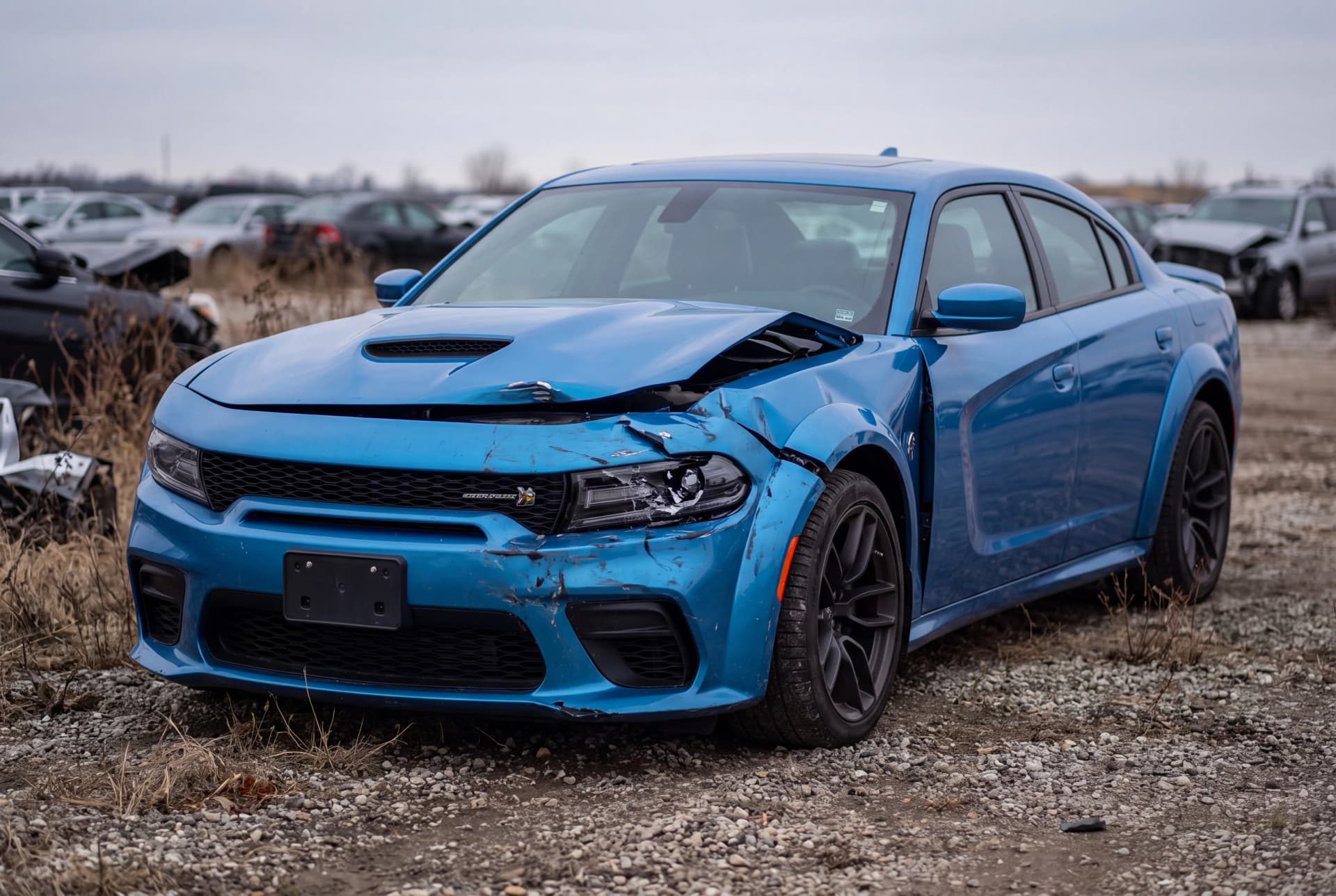
Another successful outcome in New Jersey
After William received a first offer of $28,812 for his 2019 Dodge Challenger in New Jersey, we researched what the vehicle was really worth and appraised it at $36,071. The insurer brought in its own appraiser, so the dispute was resolved through the policy appraisal clause. The final settlement came to $36,071, securing $7,259 more than the initial offer.
- GEICO’s first offer
- $28,812
- Recovered above the offer
- +$7,259
- Total settlement
- $36,071
One customer's result, before our fee.
Total-loss help in New JerseyYour New Jersey rights at a glance
Retail-consumer standard under N.J.A.C. 11:3-10.4(a)
N.J.A.C. 11:3-10.4(a) requires the insurer to 'bear in mind at all times that the insured's position is that of a retail consumer and the settlement value arrived at must be reasonable and fair for a person in that position.' Written, itemized valuations showing all options and deductions must be in the claim file and presented to the insured no later than the date of payment.
30-day Right of Recourse under N.J.A.C. 11:3-10.4(b)
If the insurer is notified in writing within 30 calendar days of the receipt of the claim draft that the insured cannot purchase a comparable vehicle at the market value established by the insurer, the insurer must reopen the claim file, and: (1) the insurer may locate a substantially similar vehicle from a licensed dealer within 25 miles of where the vehicle is principally garaged; (2) the insurer must either pay the difference between the market value before applicable deductions and the cost, or the market value under (a)2, of a substantially similar vehicle the insured located, or negotiate and effect purchase of that vehicle for the insured; (3) the insurer may offer a replacement under subsection (e); or (4) the insurer or insured may conclude the loss settlement under the appraisal section of the insurance contract.
25-mile dealer-quote rule under N.J.A.C. 11:3-10.4(a)(2)
When the insurer relies on a dealer quote (method 2 of subsection (a)), the dealer must be located within a reasonable distance, and "unless otherwise agreed by the insured, a reasonable distance shall not exceed 25 miles from the principal place of garagement." The vehicle must be available for purchase, with the dealer name and location, stock number, VIN, and description in the claim file.
New Jersey Total Loss Framework — N.J.S.A. 17:29B-4(9) + N.J.A.C. 11:3-10.4
New Jersey's total-loss rule is N.J.A.C. 11:3-10.4. Subsection (a) tells an insurer that elects a cash settlement that it "must bear in mind at all times that the insured's position is that of a retail consumer and the settlement value arrived at must be reasonable and fair for a person in that position." Written, itemized valuations showing all options and deductions must be in the claim file and presented to the insured no later than the date of payment. The cash offer must be one of the methods subsection (a) lists, plus applicable sales tax: (1) the average of two Commissioner-approved valuation manuals, (2) a dealer quotation for a substantially similar vehicle within 25 miles of the principal place of garagement unless the insured agrees otherwise, or (3) a Commissioner-approved computerized database covering at least 85% of makes and models for the last 15 years; (a)4 covers a vehicle those methods cannot value. Subsection (b) provides a right of recourse when the insured notifies the insurer in writing, within 30 calendar days of receipt of the claim draft, that a comparable vehicle cannot be purchased at the market value the insurer established. Subsection (d) imposes a "same-source rule": the insurer must use the same settlement source for all claims unless it is documented that the primary source is not available for a particular vehicle.
Common things to look for in New Jersey
Recognize these scenarios in your offer letter or comparable report — and what we do about them.
Insurer using a different valuation source than they normally use to drag the value down
N.J.A.C. 11:3-10.4(d) imposes a same-source rule: the insurer 'shall use the same source of settlement for all claims unless it is documented that the primary settlement source is not available in the case of a particular vehicle.' If your offer is built on a one-off source the insurer doesn't ordinarily use, demand documentation that the primary source was unavailable for your specific vehicle.
Dealer quotes from outside the 25-mile radius
N.J.A.C. 11:3-10.4(a)(2) caps the 'reasonable distance' for a dealer quote at 25 miles from the principal place of garagement, unless the insured agrees otherwise. Quotes from outside that radius do not satisfy methodology (2); demand a within-25-miles quote or move to methodology (1) (two-manual average) or (3) (approved computerized database).
Unitemized 'condition' or 'depreciation' deductions
N.J.A.C. 11:3-10.3(j), which 11:3-10.4(h) applies to total losses, requires deductions for previous damage or prior condition of the vehicle to be measurable, discernible, itemized and specific as to the dollar amount, and included in the insurer's claim file; 11:3-10.3(i) requires the calculations for betterment, depreciation and normal useful life to be in the claim file. Ask for the line-item basis of each deduction.
New Jersey Department of Insurance
If you believe your insurer is acting in bad faith, you can file a complaint with New Jersey Department of Banking and Insurance — Consumer Inquiry and Response Center at 800-446-7467 — nj.gov ↗.
Relevant New Jersey precedent
How SecondAppraisal helps New Jersey policyholders
- Free appraisal consultation — confirm your offer is below fair market value before you commit.
- VIN-decoded option audit so every factory feature is credited.
- Accurate and appropriate comparable vehicle research.
- Line-by-line audit of the insurer's adjustments.
- Once you invoke the appraisal clause, we carry out the appraisal process.
Frequently asked questions
What is the total-loss threshold in New Jersey?▼
Can I invoke the appraisal clause in a third-party insurance carrier / at-fault insurance carrier claim in New Jersey?▼
What does SecondAppraisal cost in New Jersey?▼
How long does a New Jersey total-loss appraisal take?▼
Ready to push back on a low New Jersey total-loss offer?
Start your free appraisal consultation in 5 minutes. At least $1,000 more than your insurer's offer, or your $495 fee is waived, once we accept your consultation. Our results: $3,648 more than the insurer's first offer, on average, before our fee. From 264 finished consultations that settled at or above the insurer's first offer, through September 25, 2026; past results, not a promise.
Get My Free Appraisal Consultation