Get the fair value you deserve for your totaled vehicle in District of Columbia
In District of Columbia, your auto policy's appraisal clause gives you the right to appoint SecondAppraisal as your independent appraiser in a total-loss dispute.
Key takeaway
In the District of Columbia, Choharis v. State Farm Fire & Casualty Co., 961 A.2d 1080 (D.C. 2008), declined to recognize a tort of bad faith by insurance companies in the handling of policy claims, stating that every contract under District law contains an implied covenant of good faith and that damages for its breach may be recovered in a contract action. Choharis also held that punitive damages are not available for a breach of contract unless the breach merges with and assumes the character of a willful tort. D.C. Code § 31-2231.17 prohibits listed claim practices, including refusing to pay claims without conducting a reasonable investigation and not attempting in good faith to effectuate prompt, fair, and equitable settlement of claims in which liability has become reasonably clear, when committed with such frequency as to indicate a general business practice; § 31-2231.17(c) lets the Commissioner impose penalties.
How SecondAppraisal helps
- •Free appraisal consultation — we review your offer before you commit.
- •At least $1,000 more, or your fee is waived. This applies once we accept your consultation and serve as your appraiser. The starting point is your insurer's offer on the day we accept. If the appraisal award, or a higher offer your insurer makes instead, is less than $1,000 above it, we waive our $495 Appointed Appraiser Service fee. If an umpire is needed, the umpire's fee is separate.
- •Average increase: $3,648 over the insurer's first offer (264 finished consultations that settled at or above the first offer, through Sep 25, 2026, before our fee).
How a total loss works in District of Columbia
Insurance carriers in District of Columbia use the Total Loss Formula (TLF) method. When the cost of repair plus the salvage value of your damaged vehicle equals or exceeds its pre-loss actual cash value (ACV), your insurer will declare your vehicle a total loss rather than authorize the repair. From that point, the dispute shifts from "will they fix it?" to "how much will they pay?"
Your appraisal-clause rights in District of Columbia
Most US auto policies — including those issued in District of Columbia — contain an appraisal clause that lets either you or the insurer demand a binding independent appraisal when you disagree on value. When invoked, you and the insurer each select a competent independent appraiser, and typically those two appraisers will agree to a new actual cash value. In the event those two appraisers are unable to agree on a value, the two appraisers can select an Umpire to break ties. Typically, you will split the cost of the third appraiser/umpire with the insurance carrier 50/50. In the event that the two appraisers are unable to agree on an umpire, the insured or the insurance carrier can petition a court with jurisdiction to select one. This rarely happens, but the chance isn't zero. The resulting valuation from any two appraisers and/or the umpire is binding.
Recent outcomes near Washington, D.C.
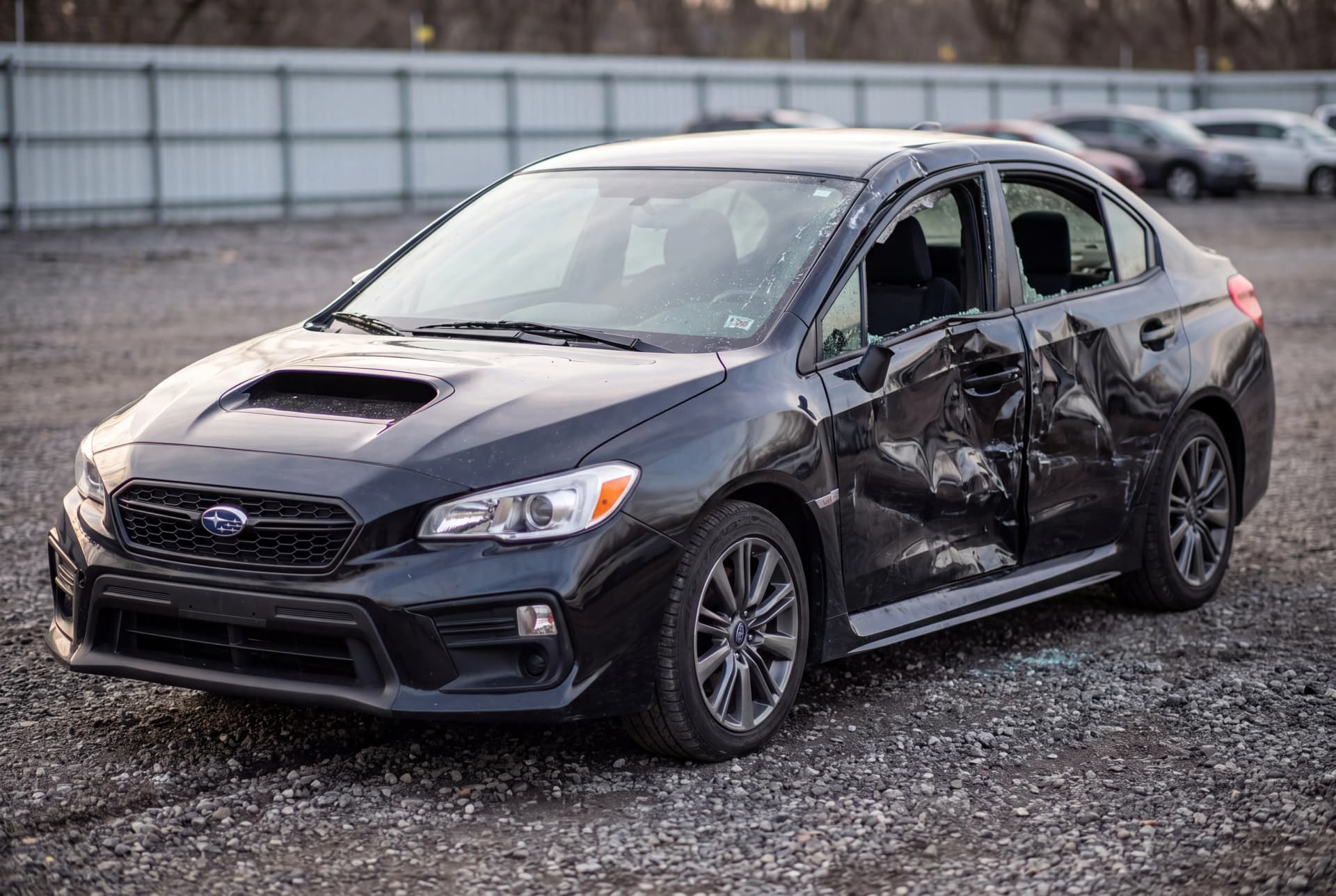
Another successful outcome in Maryland
“Second Appraisal has this figured out. Easy to use website for a well needed 2nd insurance appraisal. For a modest fee, they communicate directly with the insurance company and handle everything. I received an additional $2,500 from what my insurance company claimed was the actual cash value.”
When a Maryland driver was offered $18,063 for their 2021 Subaru WRX, our research showed that the initial proposal fell short of the vehicle's true market value. Because the insurer brought in its own appraiser, the dispute proceeded through the policy's appraisal clause to reach an agreement. The final settlement increased to $20,357, delivering $2,294 above the first offer.
- State Farm’s first offer
- $18,063
- Recovered above the offer
- +$2,294
- Total settlement
- $20,357
One customer's result, before our fee.
Total-loss help in Maryland
Roland N., Virginia
2013 Lexus GS 350
Allstate offered
$12,004
Got
$17,800
+$5,796
One customer's result, before our fee.
“They were able to get me $5,000+ more than what the initial offer was from insurance.”
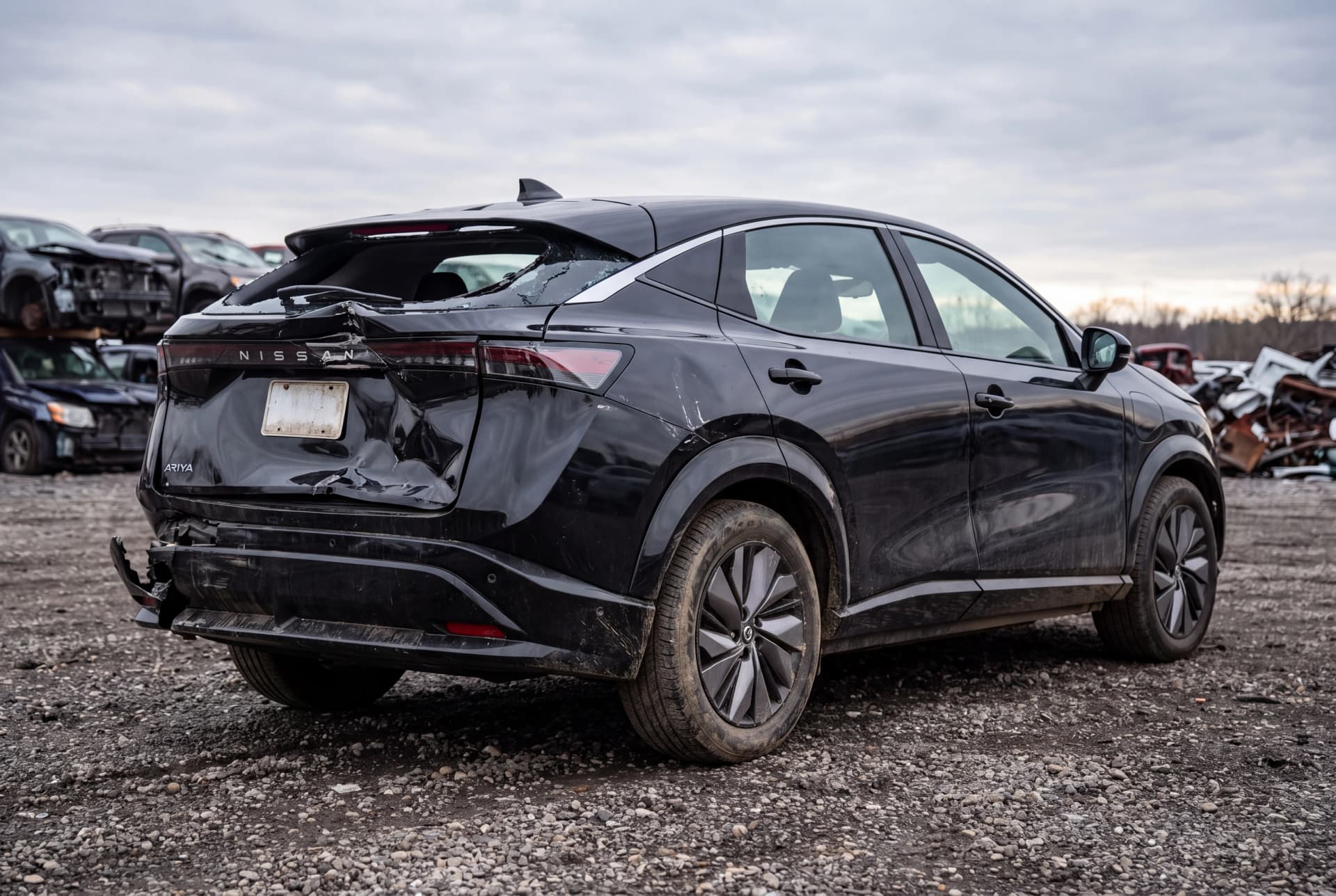
Ben I., Ohio
2023 Nissan Ariya
Allstate offered
$20,095
Got
$26,217
+$6,122
One customer's result, before our fee.
“Jonathon was extremely communicative and kept me informed at every step.”
Your District of Columbia rights at a glance
UCSPA administrative enforcement under D.C. Code § 31-2231.17
The District's UCSPA at § 31-2231.17 enumerates specific unfair claim settlement practices (failure to acknowledge, failure to investigate, failure to affirm or deny within a reasonable time, failure to attempt good-faith settlement when liability is clear, compelling insureds to litigate). § 31-2231.17(c) authorizes DISB's administrative penalties: up to $1,000 for each violation of subsection (a), and penalties under §§ 31-4305, 31-2502.03 and 31-1105 for subsection (b), which holds most of these practices. The UCSPA itself does not provide a private right of action — the practical lever is to file a DISB complaint and document the violations alongside the contract-based claim.
DMV-market local-market analysis
The District's compact geography means "local market area" routinely extends into close-in Maryland (Prince George's, Montgomery) and Virginia (Arlington, Fairfax) suburbs — the broader DMV market. This gives both insurers and policyholders a wider comparable pool than a typical jurisdiction. Demand DMV-area comparables when the insurer's offer is built only on a narrow D.C.-only sample, and challenge inflated regional pulls that don't reflect the actual local replacement market.
Contract-based implied-covenant claim
Although DC does not recognize a separate first-party bad-faith tort (Choharis), every contract under DC law contains an implied covenant of good faith and fair dealing. An insurer's unreasonable refusal to pay a covered claim is actionable as a breach-of-contract claim with contract damages. Punitive damages on the breach-of-contract theory were specifically rejected in Choharis, but contract damages plus DISB administrative enforcement remain available.
District of Columbia Total Loss Framework — D.C. Code § 31-2231.17 + Implied-Covenant Contract Framework (Choharis)
The District of Columbia's total-loss framework rests on the UCSPA at D.C. Code § 31-2231.17 (no private right of action; administratively enforced by DISB under § 31-2231.17(c)), the policy's appraisal clause, and the contract-based implied covenant of good faith and fair dealing. The D.C. Court of Appeals declined to recognize a separate tort of first-party bad faith in Choharis v. State Farm Fire & Casualty Co., 961 A.2d 1080 (D.C. 2008), placing the District among the minority of US jurisdictions that do not have a free-standing first-party bad-faith tort. The District has NOT adopted a discrete NAIC-model auto-total-loss settlement regulation with closed-list valuation methodologies — auto valuation in DC runs through the policy's appraisal clause and the UCSPA "good faith / prompt / fair / equitable settlement when liability is clear" duty, not a District regulatory mandate. The District's compact geography means "local market area" routinely encompasses the close-in Maryland and Virginia suburbs (the broader DMV market). The 75% repair-to-pre-loss-retail-value salvage threshold sits at D.C. Code § 50-1331.01 et seq.
Common things to look for in District of Columbia
Recognize these scenarios in your offer letter or comparable report — and what we do about them.
Insurer using "local market" too narrowly (D.C.-only) when a true comparable requires the DMV pool
The District's geography makes a D.C.-only comparable analysis presumptively unrepresentative — there are simply not that many private vehicle sales inside the District, and most D.C. residents shop the broader DMV used-vehicle market. Demand the Prince George's, Montgomery, Arlington, and Fairfax county comparables; insurers who artificially restrict the pool to D.C.-only listings often underbid against the actual replacement market.
Insurer using "local market" too broadly (Baltimore, Richmond) to reach below-market comparables
Conversely, sweeping in Baltimore (50+ miles north) or Richmond (100+ miles south) comparables doesn't reflect the actual D.C. replacement market either. The DMV ring is the operational market — beyond that, the comparable doesn't satisfy the policy's appraisal-clause local-market-area baseline or the UCSPA's "reasonable investigation" duty. Demand the geographic-area parameter and challenge comparables outside the close-in DMV ring.
Insurer claiming DC recognizes a first-party bad-faith tort and demanding tort-grade proof
DC does NOT recognize a separate tort of first-party bad faith — Choharis v. State Farm (D.C. 2008) affirmed dismissal of the bad-faith count and held contract remedies sufficient. Policyholders proceed via breach of the implied covenant of good faith and fair dealing (a contract claim), DISB administrative enforcement under § 31-2231.17, and the policy's appraisal clause. Insurers (or policyholders) reading Choharis as recognizing the tort are reading the case backwards.
District of Columbia Department of Insurance
If you believe your insurer is acting in bad faith, you can file a complaint with D.C. Department of Insurance, Securities and Banking — Consumer Services at 202-727-8000 — disb.dc.gov ↗.
Relevant District of Columbia precedent
How SecondAppraisal helps District of Columbia policyholders
- Free appraisal consultation — confirm your offer is below fair market value before you commit.
- VIN-decoded option audit so every factory feature is credited.
- Accurate and appropriate comparable vehicle research.
- Line-by-line audit of the insurer's adjustments.
- Once you invoke the appraisal clause, we carry out the appraisal process.
Total-loss help in major District of Columbia cities
City-specific total-loss guides with local risk factors and your appraisal-clause rights:
Frequently asked questions
What is the total-loss threshold in District of Columbia?▼
Can I invoke the appraisal clause in a third-party insurance carrier / at-fault insurance carrier claim in District of Columbia?▼
What does SecondAppraisal cost in District of Columbia?▼
How long does a District of Columbia total-loss appraisal take?▼
Ready to push back on a low District of Columbia total-loss offer?
Start your free appraisal consultation in 5 minutes. At least $1,000 more than your insurer's offer, or your $495 fee is waived, once we accept your consultation. Our results: $3,648 more than the insurer's first offer, on average, before our fee. From 264 finished consultations that settled at or above the insurer's first offer, through September 25, 2026; past results, not a promise.
Get My Free Appraisal Consultation