Get the fair value you deserve for your totaled vehicle in West Virginia
In West Virginia, your auto policy's appraisal clause gives you the right to appoint SecondAppraisal as your independent appraiser in a total-loss dispute.
Key takeaway
In West Virginia, Hayseeds, Inc. v. State Farm Fire & Casualty Co., 177 W. Va. 323 (1986), held that whenever a policyholder substantially prevails in a property damage suit against its insurer, the insurer is liable for the insured's reasonable attorneys' fees in vindicating its claim, the insured's damages for net economic loss caused by the delay in settlement, and damages for aggravation and inconvenience. McCormick v. Allstate Insurance Co., 197 W. Va. 415 (1996), a first-party automobile total-loss case, held that recovering those damages does not require a showing of bad faith. For a cash settlement of a total loss, 114 C.S.R. 14 § 7.4.a.1 requires the insurer to use a Commissioner-approved Official Used Car Guide as a guide for setting the vehicle's minimum value, with any deductions "measurable, discernible, itemized and specified concerning dollar amount," and W. Va. Code § 33-6-33 adds to the agreed cash settlement an amount equal to the consumers sales tax set forth in § 11-15-3c(b).
How SecondAppraisal helps
- •Free appraisal consultation — we review your offer before you commit.
- •At least $1,000 more, or your fee is waived. This applies once we accept your consultation and serve as your appraiser. The starting point is your insurer's offer on the day we accept. If the appraisal award, or a higher offer your insurer makes instead, is less than $1,000 above it, we waive our $495 Appointed Appraiser Service fee. If an umpire is needed, the umpire's fee is separate.
- •Average increase: $3,648 over the insurer's first offer (264 finished consultations that settled at or above the first offer, through Sep 25, 2026, before our fee).
How a total loss works in West Virginia
Insurance carriers in West Virginia use the Total Loss Formula (TLF) method. When the cost of repair plus the salvage value of your damaged vehicle equals or exceeds its pre-loss actual cash value (ACV), your insurer will declare your vehicle a total loss rather than authorize the repair. From that point, the dispute shifts from "will they fix it?" to "how much will they pay?"
Your appraisal-clause rights in West Virginia
Most US auto policies — including those issued in West Virginia — contain an appraisal clause that lets either you or the insurer demand a binding independent appraisal when you disagree on value. When invoked, you and the insurer each select a competent independent appraiser, and typically those two appraisers will agree to a new actual cash value. In the event those two appraisers are unable to agree on a value, the two appraisers can select an Umpire to break ties. Typically, you will split the cost of the third appraiser/umpire with the insurance carrier 50/50. In the event that the two appraisers are unable to agree on an umpire, the insured or the insurance carrier can petition a court with jurisdiction to select one. This rarely happens, but the chance isn't zero. The resulting valuation from any two appraisers and/or the umpire is binding.
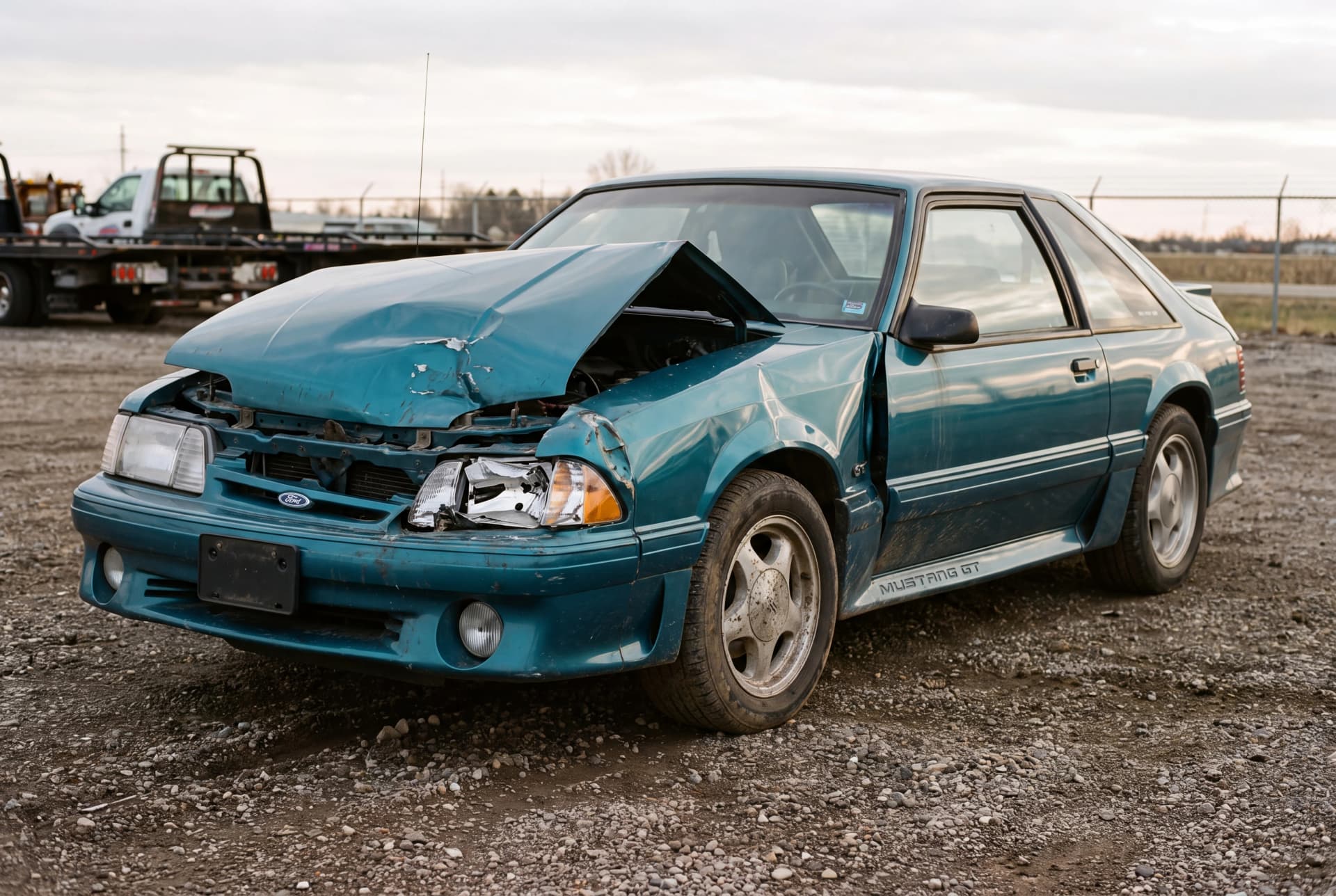
Another successful outcome in West Virginia
When Mickey filed a claim in West Virginia for a 1993 Ford Mustang, the insurance company first offered $19,404. Our research showed that offer was too low, and the matter went through the policy appraisal clause after the insurer brought in its own appraiser. The final settlement came to $25,166, recovering $5,762 more for the vehicle.
- Progressive’s first offer
- $19,404
- Recovered above the offer
- +$5,762
- Total settlement
- $25,166
One customer's result, before our fee.
Total-loss help in West VirginiaYour West Virginia rights at a glance
Hayseeds damages — attorney's fees + aggravation damages on substantially prevailing
Hayseeds, Inc. v. State Farm, 177 W. Va. 323 (1986), syllabus point 1: whenever a policyholder substantially prevails in a property damage suit against its insurer, the insurer is liable for (1) the insured's reasonable attorneys' fees in vindicating its claim and (2) the insured's damages for net economic loss caused by the delay in settlement, and damages for aggravation and inconvenience. McCormick v. Allstate, 197 W. Va. 415 (1996), held that no showing of bad faith is required.
Implied private cause of action under § 33-11-4(9) (Jenkins)
Jenkins v. J.C. Penney (W. Va. 1981) recognized that an implied private cause of action may exist for an insurer's violation of the unfair settlement practice provisions of § 33-11-4(9), maintainable only after the underlying suit is resolved and only on a showing of more than a single isolated violation (a general business practice). McCormick v. Allstate (W. Va. 1996) applied Jenkins to an insured's first-party claim. Since 2005, § 33-11-4a bars third-party claimants from bringing such an action.
Auto-total-loss methodology + itemized dollar-specified deviations under 114 C.S.R. 14 § 7.4
For a cash settlement, West Virginia's claim-handling rule directs the insurer to use the most recent Commissioner-approved Official Used Car Guide as a guide for setting the minimum value of the vehicle. Any downward deviation from the guide's retail value must be documented, and deductions must be "measurable, discernible, itemized and specified concerning dollar amount." If the guide does not list the vehicle, the insurer must secure dealer quotations on the retail value of similar vehicles and base the settlement upon them. The insurer must give a written explanation of the base figure and any adjustments, W. Va. Code § 33-6-33 adds an amount equal to the consumers sales tax to the agreed cash settlement, and the insurer may instead offer a replacement vehicle.
West Virginia Total Loss Framework — W. Va. Code §§ 33-11-4, 33-11-4a + Hayseeds v. State Farm
West Virginia's first-party framework is anchored by the Hayseeds v. State Farm (W. Va. 1986) damages rule: a policyholder who substantially prevails in a property damage suit against its insurer recovers (1) reasonable attorneys' fees, (2) net economic loss caused by the delay in settlement, and (3) damages for aggravation and inconvenience — and McCormick v. Allstate (W. Va. 1996), a first-party auto total-loss case, held that no showing of bad faith is required. Jenkins v. J.C. Penney (W. Va. 1981) recognized an implied private cause of action for violations of W. Va. Code § 33-11-4(9) shown to be a general business practice, which McCormick applied to an insured's first-party claim; the 2005 statute, W. Va. Code § 33-11-4a, bars third-party claimants from such actions and routes them to an administrative complaint. W. Va. Code § 33-6-33 and 114 C.S.R. 14 build the auto-total-loss methodology around the Commissioner-approved "Official Used Car Guide" (with deductions required to be "measurable, discernible, itemized and specified concerning dollar amount"), dealer quotations for vehicles the guide does not list, a written explanation of the offer, the sales-tax amount § 33-6-33 adds to the settlement, and the replacement-vehicle option. The 75%-of-market-value total-loss definition lives at W. Va. Code § 17A-4-10(a).
Common things to look for in West Virginia
Recognize these scenarios in your offer letter or comparable report — and what we do about them.
Insurer arguing the 2005 amendment to § 33-11-4a eliminated first-party policyholder remedies
§ 33-11-4a(a) speaks to third-party claimants: "A third-party claimant may not bring a private cause of action or any other action against any person for an unfair claims settlement practice." It does not mention Hayseeds damages, which turn on a policyholder substantially prevailing in a property damage suit against its own insurer.
Insurer claiming Hayseeds requires bad faith
McCormick v. Allstate (W. Va. 1996), syllabus point 3: to recover attorney fees, net economic loss damages and damages for aggravation and inconvenience under Hayseeds, "it is not necessary that a plaintiff show bad faith." The question is whether the policyholder substantially prevailed in the property damage suit.
Lump-sum or non-itemized downward deviations from Official Used Car Guide retail value
114 C.S.R. 14 § 7.4(a)(1) requires any downward deviation from the Commissioner-approved Official Used Car Guide retail value to be supported by documentation, with deductions "measurable, discernible, itemized and specified concerning dollar amount," and § 7.3(f), applied to total losses by § 7.4(e), imposes the same standard on deductions for previous damage or prior condition. Ask for the itemized amounts and the claim-file documentation.
West Virginia Department of Insurance
If you believe your insurer is acting in bad faith, you can file a complaint with West Virginia Offices of the Insurance Commissioner — Consumer Services at 888-879-9842 — wvinsurance.gov ↗.
Relevant West Virginia precedent
How SecondAppraisal helps West Virginia policyholders
- Free appraisal consultation — confirm your offer is below fair market value before you commit.
- VIN-decoded option audit so every factory feature is credited.
- Accurate and appropriate comparable vehicle research.
- Line-by-line audit of the insurer's adjustments.
- Once you invoke the appraisal clause, we carry out the appraisal process.
Frequently asked questions
What is the total-loss threshold in West Virginia?▼
Can I invoke the appraisal clause in a third-party insurance carrier / at-fault insurance carrier claim in West Virginia?▼
What does SecondAppraisal cost in West Virginia?▼
How long does a West Virginia total-loss appraisal take?▼
Ready to push back on a low West Virginia total-loss offer?
Start your free appraisal consultation in 5 minutes. At least $1,000 more than your insurer's offer, or your $495 fee is waived, once we accept your consultation. Our results: $3,648 more than the insurer's first offer, on average, before our fee. From 264 finished consultations that settled at or above the insurer's first offer, through September 25, 2026; past results, not a promise.
Get My Free Appraisal Consultation