Get the fair value you deserve for your totaled vehicle in Wisconsin
In Wisconsin, your auto policy's appraisal clause gives you the right to appoint SecondAppraisal as your independent appraiser in a total-loss dispute.
Key takeaway
Wisconsin's Anderson v. Continental (1978) makes first-party bad faith a tort: the insured must show "the absence of a reasonable basis for denying benefits of the policy and the defendant's knowledge or reckless disregard of the lack of a reasonable basis for denying the claim," and some breach of contract is a prerequisite (Brethorst v. Allstate, 2011 WI 41). Wis. Stat. § 628.46 adds 7.5% simple interest on claim payments overdue more than 30 days after the insurer has written notice of the fact and amount of a covered loss (the rate was 12% before 2017 Wis. Act 235).
How SecondAppraisal helps
- •Free appraisal consultation — we review your offer before you commit.
- •At least $1,000 more, or your fee is waived. This applies once we accept your consultation and serve as your appraiser. The starting point is your insurer's offer on the day we accept. If the appraisal award, or a higher offer your insurer makes instead, is less than $1,000 above it, we waive our $495 Appointed Appraiser Service fee. If an umpire is needed, the umpire's fee is separate.
- •Average increase: $3,648 over the insurer's first offer (264 finished consultations that settled at or above the first offer, through Sep 25, 2026, before our fee).
How a total loss works in Wisconsin
Insurance carriers in Wisconsin use the Total Loss Threshold (TLT) method. When the cost to repair your vehicle reaches 70% of its pre-loss actual cash value (ACV), your insurer will declare your vehicle a total loss rather than authorize the repair. From that point, the dispute shifts from "will they fix it?" to "how much will they pay?"
Your appraisal-clause rights in Wisconsin
Most US auto policies — including those issued in Wisconsin — contain an appraisal clause that lets either you or the insurer demand a binding independent appraisal when you disagree on value. When invoked, you and the insurer each select a competent independent appraiser, and typically those two appraisers will agree to a new actual cash value. In the event those two appraisers are unable to agree on a value, the two appraisers can select an Umpire to break ties. Typically, you will split the cost of the third appraiser/umpire with the insurance carrier 50/50. In the event that the two appraisers are unable to agree on an umpire, the insured or the insurance carrier can petition a court with jurisdiction to select one. This rarely happens, but the chance isn't zero. The resulting valuation from any two appraisers and/or the umpire is binding.
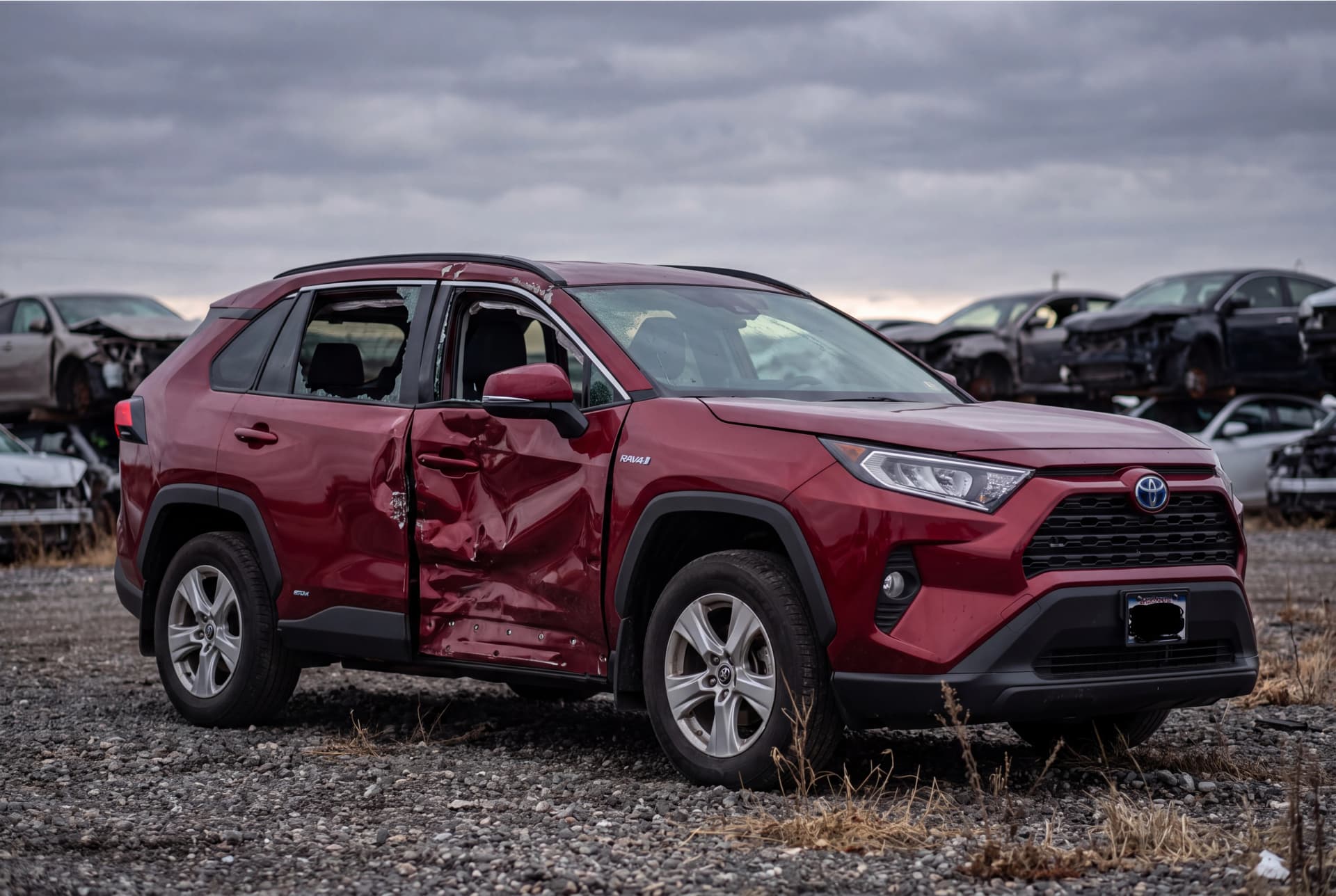
Another successful outcome in Wisconsin
“Jonathon did a terrific job of appraising my total loss vehicle and negotiating a much more reality-based and fair settlement than the insurance company offered -- an increase in $3,000 of actual cash value. Pricing was reasonable, transparent, and worth it many times over. Communication was super responsive.”
When Cynthia received an initial total loss offer of $27,211 for her 2021 Toyota RAV4 in Wisconsin, our research revealed the vehicle was worth substantially more. The matter went through the policy's appraisal clause after the insurer brought in an appraiser. The final settlement came to $30,188, which gave Cynthia $2,977 above the first offer.
- State Farm’s first offer
- $27,211
- Recovered above the offer
- +$2,977
- Total settlement
- $30,188
One customer's result, before our fee.
Total-loss help in WisconsinYour Wisconsin rights at a glance
First-party bad-faith tort under Anderson v. Continental Insurance Co.
Anderson v. Continental Insurance Co., 85 Wis. 2d 675 (1978), recognized first-party bad faith as a tort separate from breach of contract. You must show the absence of a reasonable basis for denying benefits of the policy and the insurer's knowledge or reckless disregard of the lack of a reasonable basis; a fairly debatable claim may be debated. Some breach of contract is a fundamental prerequisite (Brethorst v. Allstate, 2011 WI 41).
7.5% statutory interest on overdue claims under Wis. Stat. § 628.46
A claim is overdue if not paid within 30 days after the insurer is furnished written notice of the fact of a covered loss and of the amount of the loss, and overdue payments bear simple interest at 7.5% per year. A payment is not overdue when the insurer has reasonable proof that it is not responsible for it, and § 628.46(2) waits for the proof of loss the policy requires. The rate was reduced from 12% to 7.5% by 2017 Wis. Act 235, effective April 5, 2018.
Unfair claim-settlement standards under Wis. Admin. Code Ins 6.11
Ins 6.11(3)(a) lists practices that are unfair when committed without just cause and with such frequency as to indicate a general business practice — including failure to initiate and conclude a claims investigation with all reasonable dispatch, failure to attempt in good faith to effectuate fair and equitable settlement of claims in which liability has become reasonably clear, and compelling insureds to institute suits by offering substantially less than the amounts ultimately recovered; (3)(b) adds failures such as not adopting reasonable standards for investigating claims. Ins 6.11 does not codify a valuation methodology.
Wisconsin Total Loss Framework — Wis. Stat. § 628.46 + Wis. Admin. Code Ins 6.11 + Anderson v. Continental
Wisconsin's first-party bad-faith tort comes from the Wisconsin Supreme Court's 1978 decision in Anderson v. Continental Insurance Co., which recognized bad faith as a separate intentional tort: the insured must show the absence of a reasonable basis for denying benefits and the insurer's knowledge or reckless disregard of that lack of a reasonable basis, and some breach of contract is a prerequisite (Brethorst v. Allstate, 2011 WI 41). Wis. Admin. Code Ins 6.11(3)(a) and (3)(b) list unfair claim-settlement practices that the Office of the Commissioner of Insurance enforces; Ins 6.11 does NOT contain a total-loss valuation methodology. Wis. Stat. § 628.46 imposes 7.5%-per-year simple interest (reduced from 12% by 2017 Wis. Act 235, effective April 5, 2018) on claim payments overdue more than 30 days after written notice of the fact and amount of a covered loss. Wis. Stat. § 342.065(1)(c)'s 70% threshold is keyed to the insurance claim payment against fair market value (not repair cost against ACV) and, when the owner keeps the vehicle, triggers an insurer-to-DOT salvage notification.
Common things to look for in Wisconsin
Recognize these scenarios in your offer letter or comparable report — and what we do about them.
Insurer arguing § 628.46 interest only applies after a court judgment
Under Wis. Stat. § 628.46, a claim is overdue if not paid within 30 days after the insurer is furnished written notice of the fact and amount of a covered loss, and overdue payments bear 7.5% simple interest — the trigger is the written notice, not a judgment. Document the date of written notice. (The rate was 12% before 2017 Wis. Act 235's reduction to 7.5%, effective April 5, 2018 — confirm the rate against the operative claim period if the underlying loss predates that effective date.)
Insurer treating Anderson as available only for outright denials, not underbidding
Anderson's test asks whether the insurer had a reasonable basis for denying benefits of the policy. In Brethorst v. Allstate (2011 WI 41), an uninsured-motorist claim with $9,789 in medical expenses, the court held that the insurer's failure to pay them all "without submitting any reasonable basis in law or fact (as opposed to theory) for its failure to do so" justified discovery on the insured's bad-faith claim.
Lump-sum or non-itemized condition deductions
Wis. Admin. Code Ins 6.11 has no codified itemization requirement for condition deductions. Ask the insurer in writing for the basis and the dollar amount of each deduction.
Wisconsin Department of Insurance
If you believe your insurer is acting in bad faith, you can file a complaint with Wisconsin Office of the Commissioner of Insurance — Consumer Hotline at 800-236-8517 — oci.wi.gov ↗.
Relevant Wisconsin precedent
How SecondAppraisal helps Wisconsin policyholders
- Free appraisal consultation — confirm your offer is below fair market value before you commit.
- VIN-decoded option audit so every factory feature is credited.
- Accurate and appropriate comparable vehicle research.
- Line-by-line audit of the insurer's adjustments.
- Once you invoke the appraisal clause, we carry out the appraisal process.
Frequently asked questions
What is the total-loss threshold in Wisconsin?▼
Can I invoke the appraisal clause in a third-party insurance carrier / at-fault insurance carrier claim in Wisconsin?▼
What does SecondAppraisal cost in Wisconsin?▼
How long does a Wisconsin total-loss appraisal take?▼
Ready to push back on a low Wisconsin total-loss offer?
Start your free appraisal consultation in 5 minutes. At least $1,000 more than your insurer's offer, or your $495 fee is waived, once we accept your consultation. Our results: $3,648 more than the insurer's first offer, on average, before our fee. From 264 finished consultations that settled at or above the insurer's first offer, through September 25, 2026; past results, not a promise.
Get My Free Appraisal Consultation